
For October stripers, I plan around bait, moving water, and low light - not the date alone. I look for dawn, dusk, or nighttime current near troughs, cuts, sandbars, and inlet seams, then match my lure to where bass are feeding.
My plan comes down to 3 choices:
- When: I check tides, water temperature, wind, and surf before choosing a window.
- Where: I watch for birds, fleeing bait, and boils within casting range, while keeping secure footing and a clear exit.
- What to cast: I use pencil poppers for surface feeds, swimming plugs for shallow fish after dark, and bucktails or metal and epoxy jigs for deeper water or stronger current.
If the bite fades, I change depth, casting angle, or retrieve speed one at a time. Before heading out, I check <u>local fishing rules, beach access, and the marine forecast</u>.
Early FALL RUN Surf Fishing Tips for Striped Bass Fall Run - Smooch and Release
Choose When to Fish
Once you know the area, narrow your trip to the best tide and light window.
Pair Moving Water With Low Light
Use local tide and current predictions to find times when moving water overlaps with low light at dawn, dusk, or night.
Check Weather and Water Temperature
Before you go, check water temperature, wind, surf height, and current. Falling water temperatures in the fall often improve striper activity. Use these conditions to judge your fishing window, then match your lure depth to where fish are feeding.
Find Bait and Safe Places to Cast
Once the tide and light line up, head toward structure that gathers bait and offers a safe place to cast.
Look for troughs, cuts, sandbars, and inlet seams. Cast only from secure footing, leave enough room for your back cast, and keep your exit clear as the tide rises.
Read Beach Troughs, Cuts, and Sandbars
Scan the beach for troughs, cuts, and sandbars. Watch for baitfish popping or fleeing at the surface.
If the beach isn’t producing, move to inlet edges and other current breaks.
Fish Inlet Seams and Structure
At legally accessible inlets and structure, target current seams and depth breaks. Check your position again as the tide changes.
Match Lures and Retrieves to Feeding Depth
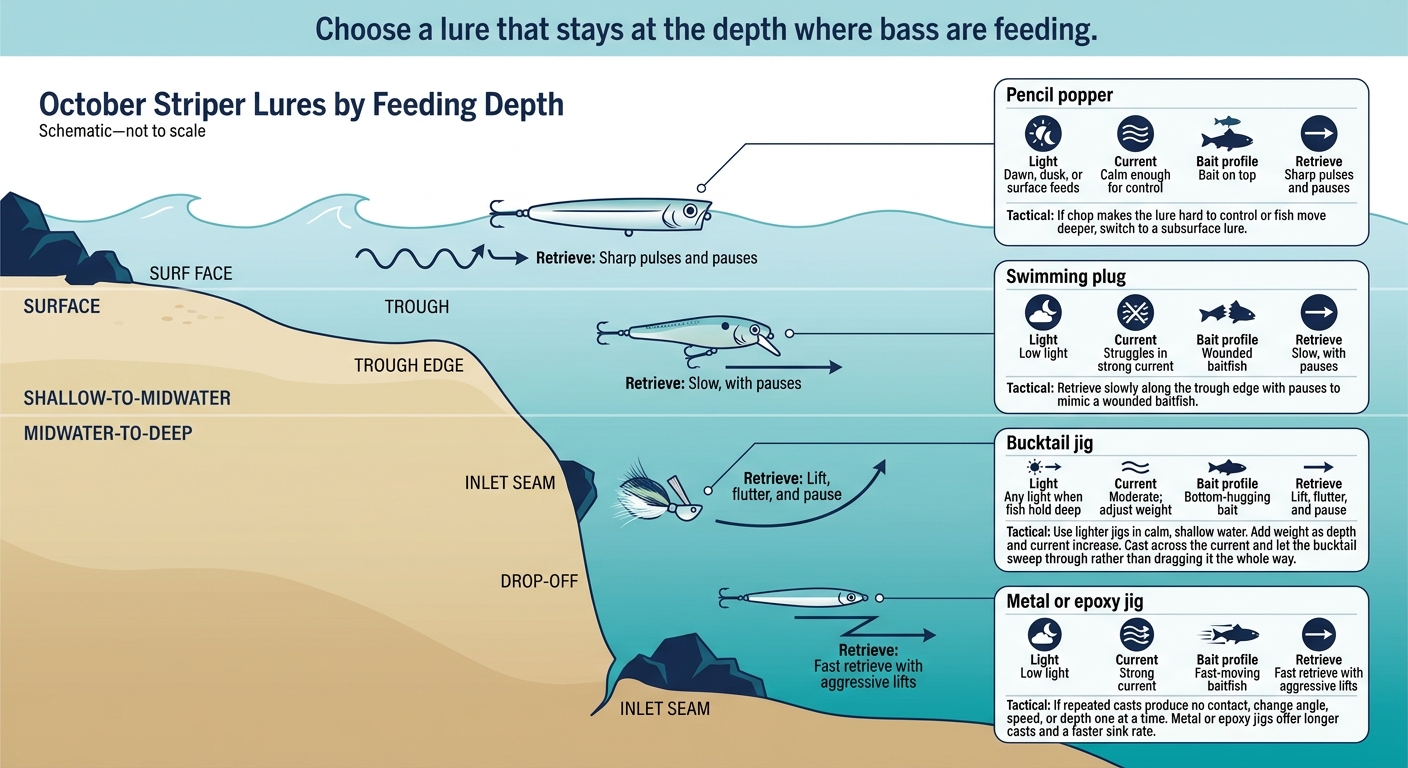
October Striper Lures by Feeding Depth
Once you find bait and current, choose a lure that stays at the depth where bass are feeding.
| Lure | Depth and shore position | Light | Current | Bait profile | Retrieve |
|---|---|---|---|---|---|
| Pencil popper | Surface over the surf face or trough | Dawn, dusk, or surface feeds | Calm enough for control | Bait on top | Sharp pulses and pauses |
| Swimming plug | Shallow to midwater along trough edges | Low light | Struggles in strong current | Wounded baitfish | Slow, with pauses |
| Bucktail jig | Midwater to deep inlet seams or drop-offs | Any light when fish hold deep | Moderate; adjust weight | Bottom-hugging bait | Lift, flutter, and pause |
| Metal or epoxy jig | Midwater to deep drop-offs or inlet seams | Low light | Strong current | Fast-moving baitfish | Fast retrieve with aggressive lifts |
Cast Pencil Poppers to Surface Feeders
Work a pencil popper across the surf face or trough with sharp pulses and pauses. Change the cadence if strikes taper off. If chop makes the lure hard to control or fish move deeper, switch to a subsurface lure.
Fish Swimming Plugs After Dark
When surface action fades, slow down and fish deeper. Choose a swimming plug that matches local baitfish, then retrieve it slowly along the trough edge with pauses. That slow pace mimics a wounded baitfish.
Sweep Bucktails Through Deeper Water
If bass hold below your plug, switch to a jig and work the seam or trough edge. Use lighter jigs in calm, shallow water. Add weight as depth and current increase.
Cast across the current and let the bucktail sweep through with a lift, flutter, and pause, rather than dragging it the whole way. If repeated casts produce no contact, change your angle, speed, or depth one at a time. Or switch to a metal or epoxy jig for longer casts and a faster sink rate.
Conclusion: Adjust as Conditions Change
Before heading out, check the marine forecast, tide chart, local striped bass regulations, and beach access rules.
Match lure depth to feeding depth. Stick with topwater while bass feed at the surface. When surface feeding fades but the current holds, switch to mid-depth lures or work bucktails or jigs near the bottom. Change your lure depth, casting angle, or retrieve speed as feeding activity shifts.
FAQs
Is incoming or outgoing tide better for October stripers?
Neither incoming nor outgoing tide is always better for October stripers. Moving water matters most. At your inlet or shore spot, choose the tide direction that moves the most bait, then fish during that swing.
In the BirdFish planning example, shrimp and bait activity line up with an outgoing tide, and stripers follow the moving water.
How can I spot a trough at high tide?
Look for deeper water between two sandbars or along the shoreline, where moving water carves a clear channel. Check the depth, current, and bottom structure at your access point before fishing.
Before wading in, test your footing and check for nearby hazards. Changing tides can make these underwater features harder to spot and reach.
How do I choose the right bucktail weight?
For October fall-run stripers, match your bucktail’s weight to the water depth and current so it stays near the strike zone. Use medium or medium-heavy tackle.
Go heavier if the current sweeps your lure out of that depth. Go lighter if you’re snagging or getting no bites, while keeping contact with the bottom or structure. Factor in wind and baitfish activity, too, to keep your bucktail in the feeding layer.
Related Blog Posts
- Fall Striper Run 2026: Where the Migration Stands Right Now
- How the First Nor'eastern of Fall Kicked the Striper Run Into Gear
- Connecticut River Mouth Fall Fishing: Stripers Stacked Up and Feeding
- Tautog Season is Open: Your Fall Blackfish Game Plan
Rep Your Water
Working the fall surf? Wear it. The Connecticut River Fishing Club Tee is heavyweight garment-dyed cotton with a striped bass back graphic and a chest hit up front.