
I look for stripers after the nor’easter eases - not during its peak. Cooling water, shifting bait, and outgoing tides can bring fish within casting range. But I need 2 things before I fish: safe access and signs of feeding.
My post-storm checklist is simple:
- Check the water: Look for diving birds, fleeing bait, and feeding fish - not rough surf alone.
- Check the route: Review alerts, tides, closures, and public access before choosing sheltered water, a beach, an inlet, or a jetty.
- Keep an exit: I choose firm footing beyond breaking waves and leave if waves reach me or my return path starts flooding.
Calm wind doesn’t mean calm surf. <u>Safe access comes first</u>; if bait disappears, I move only where conditions allow.
Post-Storm Bass Blitz the Beach - Fall Surf Fishing in Full Swing!
How Storm Conditions Affect Striper Feeding
After a storm, focus on where the bait moved. A nor’easter can cool the water and shift bait, setting up striper feeding once conditions settle.
Cooling Water Moves Fall Bait
Watch for cooling water and an outgoing tide pushing bait into the surf. That cooling matters most when the tide and surf put bait within easy reach of stripers.
Rough Water Can Help or Delay Feeding
Waves can scatter bait during the storm, then bunch it together as the water settles. That gives stripers an easier feeding opportunity. Watch for birds over bait forced into the wash - a sign of water worth checking next.
Signs of Feeding Stripers After a Storm
Watch for Bait, Diving Birds, and Feeding Fish
Once the surf settles, scan the water before choosing your spot. Gulls diving into the water alongside baitfish breaking the surface point to active feeding. Hovering or resting birds may mean the feeding action has moved elsewhere. If the surface goes quiet, keep moving.
Put Safe Shoreline Access First
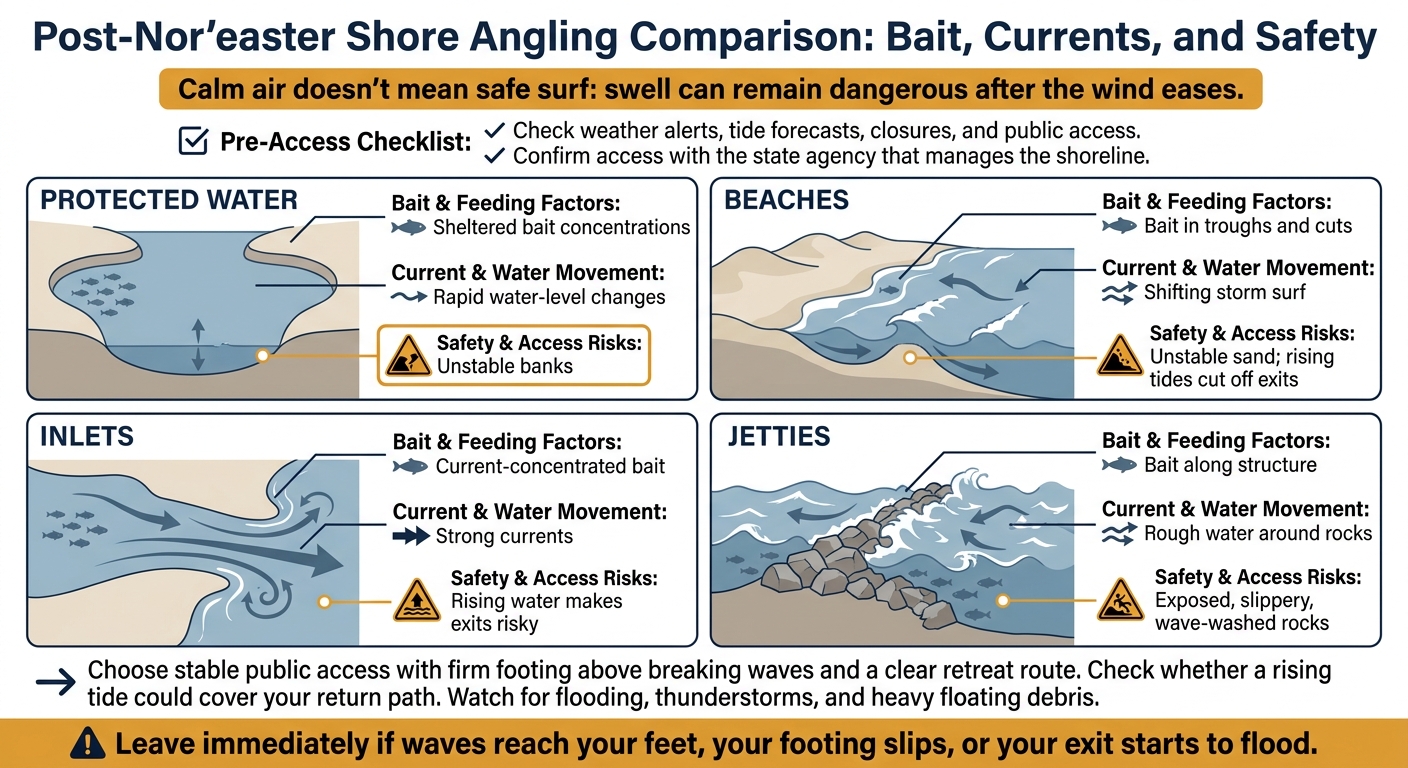
Post-Storm Striper Fishing: Compare Shoreline Access
Before fishing after a nor’easter, check weather alerts, tide forecasts, closures, and public access. Confirm access with the state agency that manages the shoreline. Calm air doesn’t mean safe surf: swell can remain dangerous after the wind eases.
Compare Protected Water, Beaches, Inlets, and Jetties
A storm can bring fish within reach while changing how you get to them. Even when bait is present, make sure you can reach it safely. Check more than one access point, then choose a spot that fits the conditions.
| Location | Bait & Feeding Factors | Current & Water Movement | Safety & Access Risks |
|---|---|---|---|
| Protected water | Sheltered bait concentrations | Rapid water-level changes | Unstable banks |
| Beaches | Bait in troughs and cuts | Shifting storm surf | Unstable sand; rising tides cut off exits |
| Inlets | Current-concentrated bait | Strong currents | Rising water makes exits risky |
| Jetties | Bait along structure | Rough water around rocks | Exposed, slippery, wave-washed rocks |
Choose Firm Footing and a Clear Exit
Choose stable public access with firm footing above breaking waves and a clear retreat route. Check whether a rising tide could cover your return path. Watch for flooding, thunderstorms, and heavy floating debris.
Leave immediately if waves reach your feet, your footing slips, or your exit starts to flood. Don’t move closer for one more cast.
Once you’ve confirmed that the route is dry, stable, and legal, fish the safest edge that still lets you reach the bait.
Conclusion: Follow a Simple Post-Storm Fishing Plan
After the storm passes, let conditions settle. Then fish only where safe access and visible bait overlap. Birds working over fleeing baitfish or shrimp can point to surface-feeding stripers. If those signs fade, move on - but only if the water and access remain safe.
FAQs
How long after a nor’easter should I target stripers?
Let post-storm conditions - not a set waiting period - guide when you fish. Watch for baitfish gathering along beaches and birds feeding above fish. Both can point you toward feeding activity.
Before heading out, check water clarity, surf conditions, and wind direction to make sure you can safely access the shoreline. Review local weather alerts and tide forecasts, too. Favor stable conditions for safer, more productive fishing.
How does murky water affect post-storm striper fishing?
The search results don’t explain how murky water affects striper fishing after a storm.
Which wind shifts improve post-storm striper fishing?
The available information doesn’t pinpoint which wind shifts improve post-storm striper fishing. Wind affects feeding activity, but before planning a trip, check local weather alerts, river conditions, and baitfish movement to judge safety and timing.
Related Blog Posts
- New England Fishing Traditions That Have Survived for Generations
- Fall Striper Run 2026: Where the Migration Stands Right Now
- False Albacore 101: How to Catch Fall's Fastest, Pickiest Fish
- Tautog Season is Open: Your Fall Blackfish Game Plan
Rep Your Water
When the storm clears, the feed turns on. The Cape Ann Fishing Club Tee carries the legend: sea serpent back graphic, lighthouse chest hit, heavyweight garment-dyed cotton.