
I look for 3 signs before fishing a blitz: diving birds, fleeing bait, and surface strikes. Then I match my lure to the bait’s size and shape, approach quietly, and cast past the edge - not into the middle.
My plan is simple:
- Match the bait: Small metal jigs for peanut bunker; slender soft plastics for sand eels.
- Stay outside the school: From a boat, slow down early and account for wind and current.
- Change one thing at a time: Adjust lure size, retrieve speed, or pauses if fish won’t bite.
- Follow the fish: Cast ahead of their path, and try deeper water when surface action fades.
The goal? <u>Keep my lure near feeding fish without scattering the bait.</u> I fish where the school is going, not just where it last splashed.
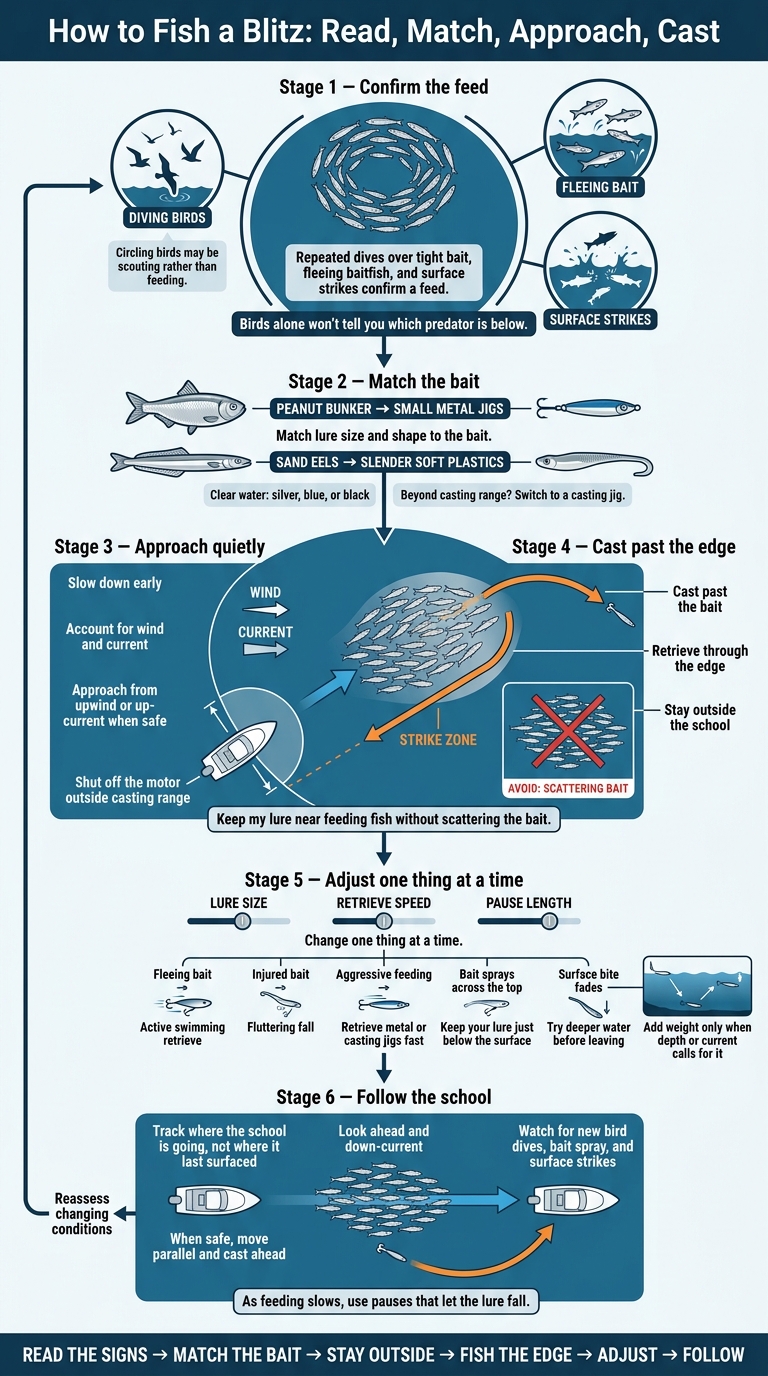
How to Fish a Blitz: Read, Match, Approach, Cast
Read Feeding Signs and Choose Your Lure
Tell Feeding Activity From Bird Activity
Circling birds may be scouting rather than feeding. Repeated dives over tight bait, fleeing baitfish, and surface strikes are the clearest signs of an active blitz.
Birds help you find vulnerable bait, but baitfish movement and strikes confirm the feed. Birds alone won’t tell you which predator is below.
False albacore and bonito can feed aggressively at the surface; watch for fish before narrowing your lure choice.
Confirm the feed, then match your lure to the bait before casting.
Match Lure Size and Shape to the Bait
For short, deep-bodied peanut bunker, use small metal jigs; for long, slender sand eels, use slender soft plastics.
In clear water, start with silver, blue, or black.
Match your retrieve to the bait’s movement: use an active swimming retrieve for fleeing bait or a fluttering fall to mimic injured bait. If the feed is beyond casting range, switch to a casting jig.
With your lure matched to the bait, stay outside the school and work the edge.
Approach Quietly and Fish the Edges
Get Within Range Without Scattering the School
Once your lure matches the bait, ease into range without breaking up the feed. Watch which way the school is moving, then account for wind and current so you don’t cut it off.
From a boat, slow down early. Approach from upwind or up-current when safe, and shut off the motor outside casting range.
Cast Beyond the Bait and Retrieve Through the Edge
Cast past the bait, then retrieve along the edge where the current pushes bait to the surface.
On an outgoing tide, popping shrimp and surface bait can mark active trout and redfish; diving gulls often point to the feed.
If the school keeps moving, adjust your retrieve to keep your lure in the strike zone.
Adjust Your Retrieve and Follow the School
Change Speed, Size, or Depth When Fish Miss
Let the bait set your pace. Retrieve metal or casting jigs fast when fish feed aggressively. If they won’t commit, change one thing at a time: lure size, retrieve speed, or pause length. When bait sprays across the top, keep your lure just below the surface.
As the strike zone shifts, stop casting at the splash and start fishing the school’s path.
If the surface bite fades, try deeper water before leaving. Let the jig sink farther, then work it through midwater with lifts and falls. Add weight only when depth or current calls for it.
Move Ahead of the Feeding Fish
Track where the school is going, not where it last surfaced. Look ahead and down-current for new bird dives, bait spray, and renewed surface strikes. When it’s safe, move parallel to the school and cast ahead of its path instead of chasing every eruption.
Stay mobile. As feeding slows, switch from a fast retrieve to pauses that let the lure fall.
How To Find and Follow Blitzing Striped Bass In The Fall
Conclusion: Put the Blitz Tactics Together
Read the signs, match your lure’s length and shape to the bait, and cast past the edge while staying outside the school. As the school moves, change your retrieve, depth, and position to follow it and keep your lure in the strike zone.
FAQs
How can I fish a blitz from shore?
Watch for diving birds and surface strikes above tightly packed baitfish fleeing predators. Match your lure size to the bait: use small metal jigs for peanut bunker or slender soft plastics for sand eels.
Approach and cast quietly so you don’t scatter the school. Aim for the edges or feeding lanes rather than the center. Start with a fast retrieve near the surface, then change your casting angle as the birds and strikes shift. Keep using the same bait-matched lure size.
What if I can’t identify the baitfish?
Many effective lures imitate the movement and shape of distressed prey, not a specific species. Match your lure’s size and profile to the bait you can see, and let the intensity of surface strikes help guide your choice.
Casting jigs or flutter jigs often work well across different conditions. Their erratic action mimics a wounded baitfish and can trigger reaction strikes, regardless of the exact bait present.
How do I predict where a blitz will move?
Watch where the birds are heading and which way the baitfish are fleeing. Predators usually chase baitfish along a path, often pushing them toward the surface or shore. Birds follow the bait, giving you clues about where the feeding frenzy is headed.
Keep your boat - or your approach - along the edges of the activity. Move in the same direction as the school to stay ahead as the action shifts.
Related Blog Posts
- Connecticut River Mouth Fall Fishing: Stripers Stacked Up and Feeding
- False Albacore 101: How to Catch Fall's Fastest, Pickiest Fish
- Surfcasting October: Timing, Lures, and Tactics for Fall-Run Stripers
- Night Fishing for Stripers: Dock Lights and After-Dark Tactics
Rep Your Water
Reading the blitz? Wear the run. The Connecticut River Fishing Club Tee is heavyweight garment-dyed cotton with a striped bass back graphic and a chest hit up front.