
For a Cape Cod fall trip, I’d start with stripers or bluefish from shore - or book a crew-led charter for giant bluefin tuna. Before choosing a spot, I’d check bait activity, tides, wind, and safe access.
Here’s how I’d narrow down the 3 options:
- Stripers: Fish beaches and inlets with moving water, using plugs, swimbaits, or bucktails.
- Bluefish: Look for birds and bait schools, cast metal lures, and keep pliers ready for unhooking.
- Giant bluefin tuna: Plan a boat trip with heavy tackle and a crew ready for offshore conditions.
My rule: <u>match the trip to your experience - not just the fish you want</u>. I’d pack warm layers and rain gear, verify Massachusetts fishing rules and federal tuna requirements, and confirm parking and beach access. If wind, surf, or seas exceed what the crew can handle, I’d cancel.
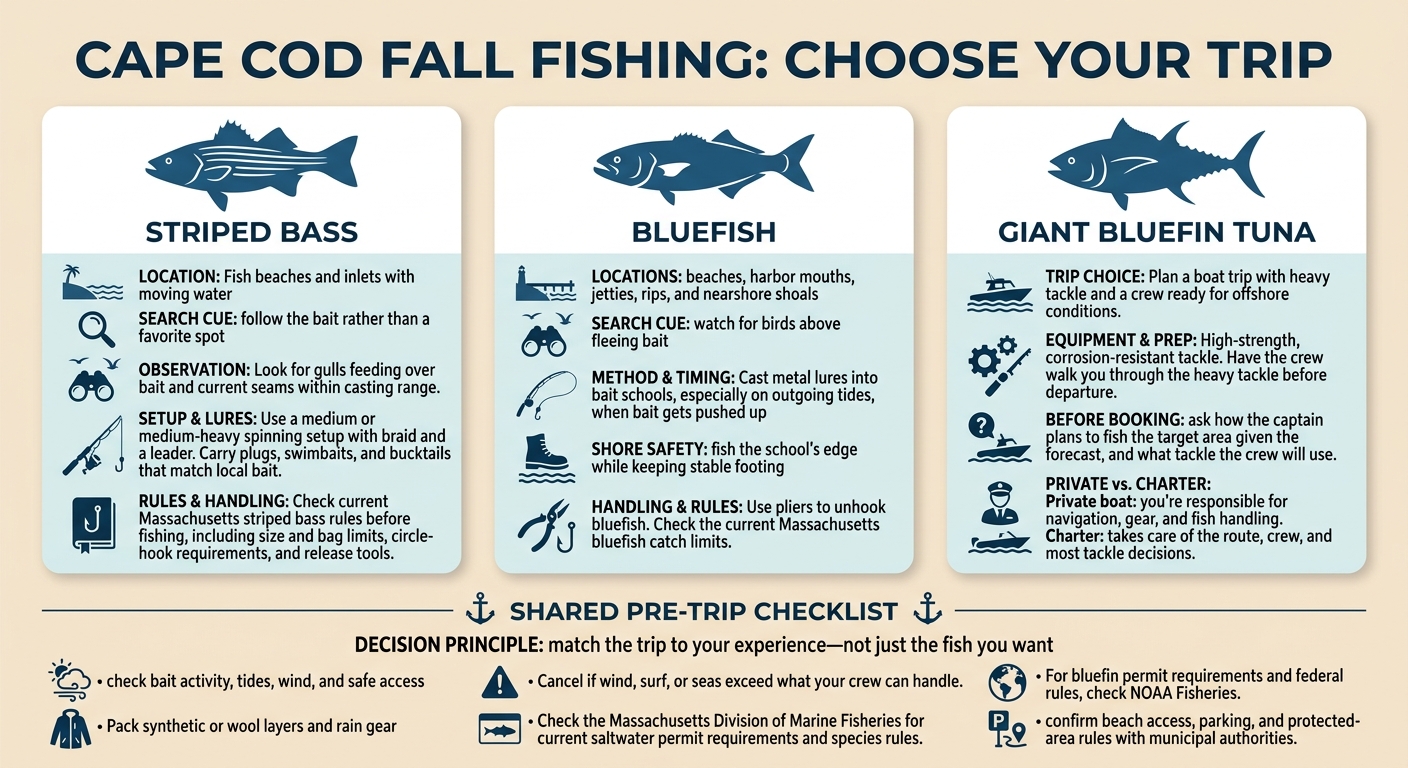
Cape Cod Fall Fishing: Compare 3 Target Species
Striped Bass: Fish Beaches and Inlets
Find Moving Water and Safe Shore Access
Along beaches and inlet mouths, follow the bait rather than a favorite spot. Look for gulls feeding over bait and current seams within casting range. Polarized sunglasses can help you spot seams, troughs, and drop-offs near bait. Choose a shore spot you can reach and fish safely.
From a boat, work those same seams and edges at a safe angle, staying clear of shoals and rips.
Choose Surf Tackle, Lures, and Bait
Use a medium or medium-heavy spinning setup with braid and a leader. Carry plugs, swimbaits, and bucktails that match local bait.
Slow your retrieve on a falling tide, and speed it up when bait scatters. Legal bait is another option when bass hold around a specific tidal feature.
Check Striper Rules and Release Fish Safely
Check current Massachusetts striped bass rules before fishing, including size and bag limits, circle-hook requirements, and release tools. Keep those tools ready so you can promptly return any unwanted fish or catch you can't legally keep.
When bass stop feeding along the edges, switch to bluefish tactics and metal lures.
Bluefish: Cast Metal Lures Near Bait Schools
Spot Feeding Fish and Choose Tough Lures
When bass stop holding along the bait’s edge, switch to bluefish. Cast metal lures into bait schools, and watch for birds above fleeing bait. Focus on beaches, harbor mouths, jetties, rips, and nearshore shoals - especially on outgoing tides, when bait gets pushed up.
Compare Shore and Small-Boat Fishing
From shore, fish the school’s edge while keeping stable footing. Small boats let you follow moving bait, but stick to water you can safely handle.
Handle Bluefish Safely and Check Catch Limits
Use pliers to unhook bluefish. Their teeth can cut skin fast. Before keeping any fish, check the current Massachusetts bluefish catch limits.
Fall Run Fishing off Cape Cod with Hogy Lures
Giant Bluefin Tuna: Plan a Crew-Led Trip
Giant bluefin tuna are the offshore step up from inshore bass and bluefish. Around Cape Cod, tuna trips depend on the weather and where the fish are offshore. High-strength, corrosion-resistant tackle is a must.
Check Charter Credentials and Trip Details
Before booking, ask how the captain plans to fish the target area given the forecast, and what tackle the crew will use. Conditions can change fast, so the plan may need to change, too. The fishing method and crew setup should match how the tuna are biting.
Understand Tuna Tackle and Fishing Methods
Crews may use surface methods on calmer days and switch tactics when the water gets rough. Ask which method they expect to use and why. Surface methods, such as popping jigs, work poorly in choppy or windy conditions. Have the crew walk you through the heavy tackle before departure.
Compare Private Boats and Tuna Charters
On a private boat, you’re responsible for navigation, gear, and fish handling. A charter takes care of the route, crew, and most tackle decisions.
Trip Checklist and Final Tips
Choose Your Fishing Plan
Choose a trip that fits your target species, the weather, and your crew’s experience.
| Trip | Targets | Equipment | Exposure | Experience |
|---|---|---|---|---|
| Shore | Stripers, bluefish | Medium to medium-heavy surf tackle | High: wind/surf | Beginner to advanced |
| Private boat | Stripers, bluefish, tuna | Boat tackle and required safety gear | Moderate to high | Intermediate to advanced |
| Charter | Giant bluefin tuna | Professional heavy tackle | High: offshore | Ready for offshore demands |
Once you’ve picked your trip, check for conditions that could mean canceling.
Pack for Cold Water and Know When to Cancel
Pack synthetic or wool layers and rain gear for cold-water conditions. Cancel if wind, surf, or seas exceed what your crew can handle.
Before heading out, confirm fishing rules and access details - they can change from day to day.
Verify Permits, Fishing Rules, and Local Access
Check the Massachusetts Division of Marine Fisheries for current saltwater permit requirements and species rules. For bluefin permit requirements and federal rules, check NOAA Fisheries.
On the day of your trip, confirm beach access, parking, and protected-area rules with municipal authorities.
Pack out your trash.
FAQs
Which fall months are best for each species?
In New England’s tidal waters, fall fishing for striped bass and bluefish typically runs from September through November, as both species follow migrating baitfish. Striped bass fishing stays productive throughout fall, while the best timing for giant bluefin tuna depends on seasonal migrations and shifts in water temperature.
Watch local water temperatures and bait activity to find the most active fishing windows for your target species.
How does fall wind affect where I should fish?
In lower tidal reaches, wind combines with water temperature and tidal movement to shape feeding activity. It also affects how well you can present your lures.
Use heavier, streamlined lures in windy conditions to reduce drag and cast more accurately. Topwater popping jigs work better in calm water than in wind or chop. Always check wind and weather alerts before heading out.
What should I ask about a tuna charter’s cancellation policy?
Before booking a tuna charter, check the cancellation policy. If the operator cancels because of poor weather or unsafe seas, will you get a full refund, a partial refund, or the option to reschedule? Also, ask how far in advance you must cancel for personal reasons to qualify for a refund. Knowing these terms helps protect the money you’ve spent if your plans change.
Related Blog Posts
Rep Your Water
Fishing the Cape this fall? Wear it. The Cape Cod Fishing Club Tee is heavyweight garment-dyed cotton with a striped bass back graphic and a lighthouse chest hit.