
My plan for fall fishing with kids: pick 1 small goal, keep the trip short, and put safety before catching fish. A practice cast or a fish spotted from shore counts as a win.
Here’s the checklist I’d use:
- Choose an easy-access pond or stocked lake. Check the forecast, state fishing rules, and any stocking updates before leaving.
- Pack light, but plan for cold. Bring a push-button rod, worms, basic tools, water, snacks, warm layers, rain gear, and spare clothes.
- Practice before approaching the water. Start with a hookless weight, let adults handle hooks and snags, and keep the casting area clear.
- Make water safety a rule. Use properly fitted life jackets, set shore boundaries, and require permission to approach.
- End while it’s still fun. Take a birdwatching break if interest fades, then ask what your child would like to do next time.
My measure of a good outing? <u>A child who wants to go again</u> - not a full bucket of fish.
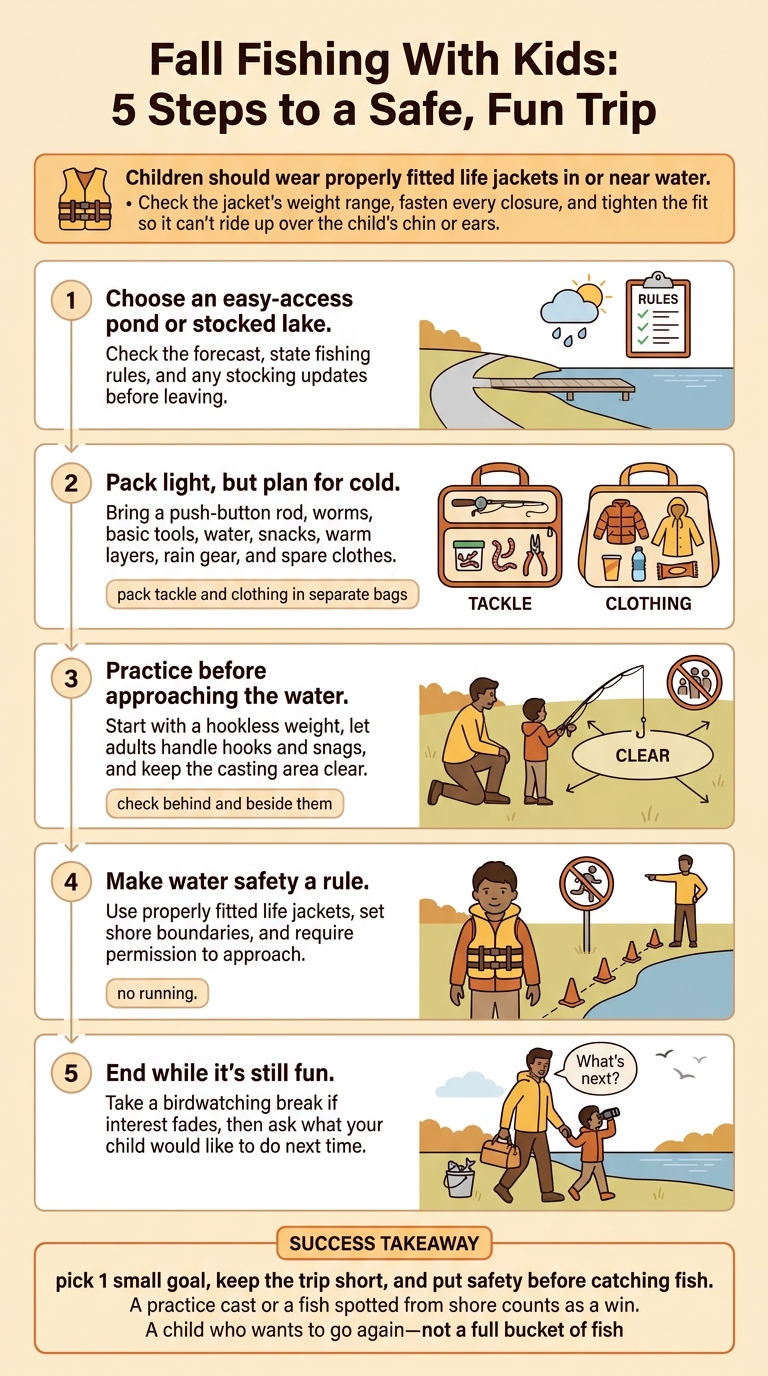
Fall Fishing With Kids: 5 Steps to a Safe, Fun Trip
Fishing 101: Fishing with Kids
Pack Simple Tackle and Warm Clothing
Once you’ve checked the forecast, pack tackle and clothing in separate bags so you can find what you need.
Start With a Push-Button Reel and Worms
Keep your setup simple: a short spincast rod with a push-button reel, a small hook, a bobber, and worms.
Bring Tools, Snacks, and Rain Gear
Pack water, snacks, and basic tools. Bring spare clothes, warm layers, rain gear, and a hat, too.
Set Up the Rig and Teach Safe Casting
Once the gear is packed, demonstrate casting on dry land, away from the water’s edge. Set shore boundaries before children move closer. A practice cast takes the pressure off and keeps the focus on learning.
Adults should handle hooks, baiting, and tackle changes until kids can follow directions and keep the rod pointed away from people.
Attach the Hook, Split Shot, and Bobber
Tie the hook securely, then gently pull the line to check the knot. Keep the hook point covered whenever you’re not working on it. Use pliers to pinch a small split shot onto the line above the hook, then attach the bobber farther up.
For the first casts, use a hookless practice weight.
Teach a Simple Casting Sequence
Have your child check behind and beside them, hold down the reel button, and aim toward an open target. Practice a smooth swing, releasing the button as the rod moves forward.
Keep everyone clear of the rod’s swing and the line.
Use Life Jackets and a 3-Stage Safety Checklist
Children should wear properly fitted life jackets in or near water. Check the jacket’s weight range, fasten every closure, and tighten the fit so it can’t ride up over the child’s chin or ears.
Keep the routine simple to help kids feel confident and protect the fun:
- Before approaching shore: Set boundaries, require permission to approach, and explain “no running.”
- While casting: Check behind and beside the caster, keep the area clear, and stop if someone steps into it.
- When retrieving a snag: Let an adult handle it. Children should not wade in or yank the line toward people.
Keep Trips Short and Goals Within Reach
With gear ready and safety rules clear, choose a daylight window when your child is rested and comfortable. Keep the first trip short, so you can head home if your child gets cold or loses interest.
Celebrate Casting and Nature Observations
Practicing a cast or spotting fish counts as success. Choose just one goal to keep the outing low-pressure.
If your child’s interest fades, try birdwatching instead.
Follow a Simple Outing Plan
Stick to that one goal, leave room for a birdwatching break, and head home while your child still wants to come back.
End before the trip feels like hard work. Let what your child enjoyed most guide the next outing.
Conclusion: Build on What Kids Enjoyed
After the trip, talk about what went well and keep the next outing short.
Name one thing your child learned or noticed - even if they didn’t catch a fish. Then ask what they’d like to do again, and use their answer to plan the next trip.
FAQs
What time of day is best for fall fishing with kids?
Plan trips for low-light hours, when fish are most active and feeding. Keep outings short and set goals kids can reach so they stay interested and enjoy their time on the water.
Do kids need a fishing license?
A child’s need for a fishing license depends on their age and the state where they’ll fish. Before heading out, check your state’s official wildlife or environmental agency website for current age requirements, youth license exemptions, and any other local fishing rules you’ll need to follow.
How long should a child's first fishing trip last?
Keep your child’s first fishing trip short. A brief outing helps them stay focused and enjoy fishing without the pressure of spending a full day on the water.
Related Blog Posts
- New England Fishing Traditions That Have Survived for Generations
- How to Get Kids Excited About Fishing
- Best Fish for Kids to Catch in New England
- How to Make a Fishing Trip Fun Even When the Fish Aren't Biting
Rep Your Water
First fish for the kids? Dress them for it. The The Hit List - Boston Edition Youth Tee is the kid-sized version of the adult favorite.