

Gloucester became a top fishing town for one simple reason: the right place met the right work. I’d boil it down to 4 connected parts - a safe harbor, short runs to rich offshore grounds, a fleet built for larger catches, and a waterfront set up to unload, salt, pack, and ship fish fast.
If you want the short answer, here it is:
- Cape Ann gave Gloucester a working harbor close to open water.
- North Atlantic fishing grounds were nearby, which cut travel time and helped boats bring back more cod and haddock.
- The fleet grew from small local craft to schooners, especially in the 1800s.
- Dockside labor turned fish into trade, with crews, net menders, repair workers, and immigrant labor keeping the port active.
That mix helped Gloucester move from a fishing settlement to a major port. In practice, the town’s harbor handled the boats, the sea supplied the catch, and the waterfront turned that catch into business.
| Factor | What it did for Gloucester |
|---|---|
| Harbor | Gave boats a solid home base for landing, repairs, and loading |
| Fishing grounds | Put cod and haddock within reach |
| Fleet growth | Let fishermen go farther offshore and bring back larger catches |
| Waterfront labor | Helped process, pack, and ship fish to market |
My takeaway: Gloucester stood out because these parts fit together over generations, not because of one single advantage.
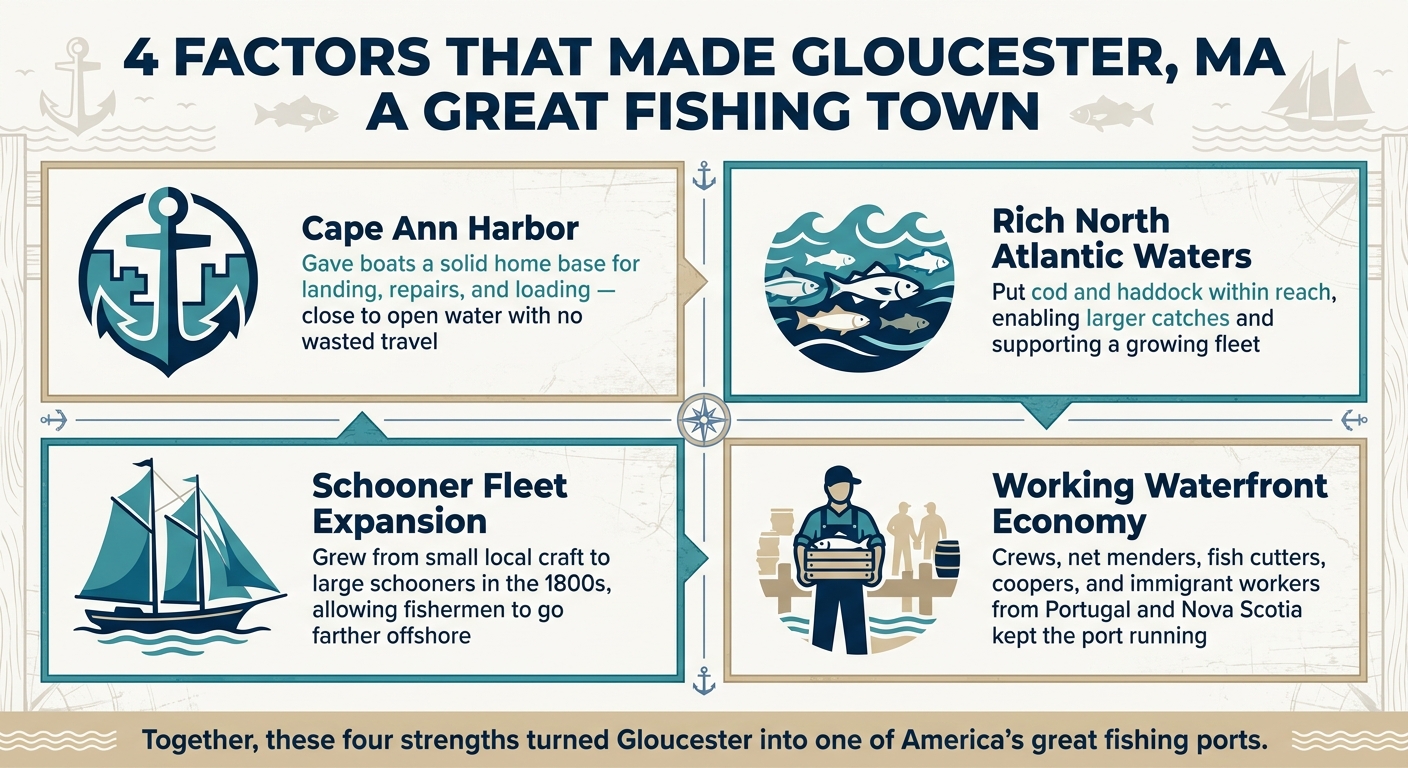
4 Factors That Made Gloucester, MA a Great Fishing Town
Gloucester's Golden Age Of Fishing: Part 1 (1623 - 1923)
sbb-itb-d0a8c9d
Cape Ann and a Harbor Built for Fishing
Gloucester sits on Cape Ann, and its harbor gave local fishermen a practical place to launch, land, and service their boats. That was the main thing that mattered. The harbor put a working fleet close to the open sea without a lot of fuss or wasted travel.
Why Gloucester Harbor Mattered
Historic harbor buildings and working waterfront structures still point to the town’s long fishing and boat-maintenance tradition.
This wasn’t just a nice shoreline. It was a place built around work. Boats needed room to come and go, crews needed places to unload, and repairs had to happen right on the waterfront. Gloucester Harbor made all of that possible.
A Strong Position on the North Atlantic Coast
The harbor also mattered because it opened straight onto productive fishing waters offshore. From that base, Gloucester could reach the fishing grounds that made the town wealthy.
In plain terms, Gloucester had the kind of location fishing towns hoped for: a harbor that worked and access to the waters that fed the local economy.
Rich Fishing Grounds Within Reach
Gloucester's harbor put fishermen close to productive North Atlantic waters. That mattered in a big way. Local boats could get to the fishing grounds that kept the town's economy going and return with cod and haddock in volumes that made fishing a serious business.
Because those waters were so close, Gloucester could support larger schooners and an expanding fishing fleet.
How Gloucester Grew from Fishing Settlement to Major Port
Those fishing grounds did more than fill nets. They helped build the trade that turned Gloucester into a busy port.
Early Settlement and the Salt-Fish Trade
Gloucester's early economy was built around salted cod and haddock. What started as local fishing soon became a trade that reached well beyond Cape Ann. The early waterfront supported a growing salt-fish business, linking the town to markets up and down the Atlantic coast and farther afield.
Schooners and the Growth of the Fleet
As demand increased, Gloucester's fleet grew from local boats to larger schooners made for longer trips. With more schooners on the water, Gloucester's fishermen could work farther offshore, bring in bigger catches, and help the town operate as a major port.
Gloucester as a Nineteenth-Century Fishing Center
That growth in the fleet helped make Gloucester a leading fishing center in the nineteenth century. Cod and haddock drove the town's economy and shaped its identity as a working port.
The Working Waterfront That Defined Gloucester
As Gloucester's fleet grew, the shoreline had to do a lot more than give boats a place to tie up. It had to handle unloading, processing, repairs, and shipping. In plain terms, Gloucester's waterfront was built around fishing. Wharves, fish houses, repair shops, and processing sheds helped keep the fleet moving and the catch ready for market.
Wharves, Warehouses, and Fish Processing
Life on the docks revolved around hard, hands-on work. Workers unloaded fish, mended nets, repaired boats, salted the catch, and packed it for shipment. Cod and haddock brought in by Gloucester's schooners often moved straight from the docks into fish houses, where crews salted, dried, and packed the fish for markets along the Atlantic coast and farther away.
Immigrant Labor and the Maritime Community
This wasn't isolated work. It depended on a tightly connected waterfront community, with sailors, fish cutters, net menders, coopers, and other skilled workers all playing a part in keeping the fishing economy running. Immigrant workers from Portugal, Nova Scotia, and other places became a key part of that labor network, filling both shipboard and shore-side jobs that kept the port running through the nineteenth century and into the twentieth.
Why Gloucester Still Stands Out Today
Gloucester still stands out because its harbor is still visibly tied to the working docks, fish houses, and maritime labor that made the town a fishing center. Put together, these shore-side trades made Gloucester more than just a harbor town. They made it a full fishing port.
Conclusion: What Made Gloucester Distinct
Gloucester didn't rise by chance. Its harbor, offshore fishing grounds, fleet, and waterfront economy worked together for generations.
What set Gloucester apart was this mix: a natural harbor, rich offshore fishing grounds, a growing schooner fleet, and a waterfront built on hard work. Each part supported the others. The harbor gave ships a strong home base. The fishing grounds supplied the catch. The fleet expanded the town's reach. And the waterfront turned that work into daily business.
Key Points to Take Away
Gloucester stood out because its harbor, offshore fishing grounds, fleet, and waterfront labor fit together so well. Together, those strengths made Gloucester one of America's great fishing towns and gave the city a waterfront identity that still comes through clearly today.
That's what separated Gloucester from other coastal towns.
FAQs
Why was Gloucester’s harbor important?
Gloucester’s harbor mattered because it gave the town a natural, protected route to the rich fishing grounds of the North Atlantic.
That edge helped Gloucester build a strong working waterfront and support a large, productive fishing fleet at the heart of its identity and economy.
What fish made Gloucester successful?
The search results don’t say which fish species made Gloucester, Massachusetts, successful.
In plain English: they don’t name any specific fish linked to the town’s success.
How did schooners change Gloucester fishing?
The source material doesn't explain how schooners changed fishing in Gloucester, Massachusetts.
So this question can't be answered from the information provided.