

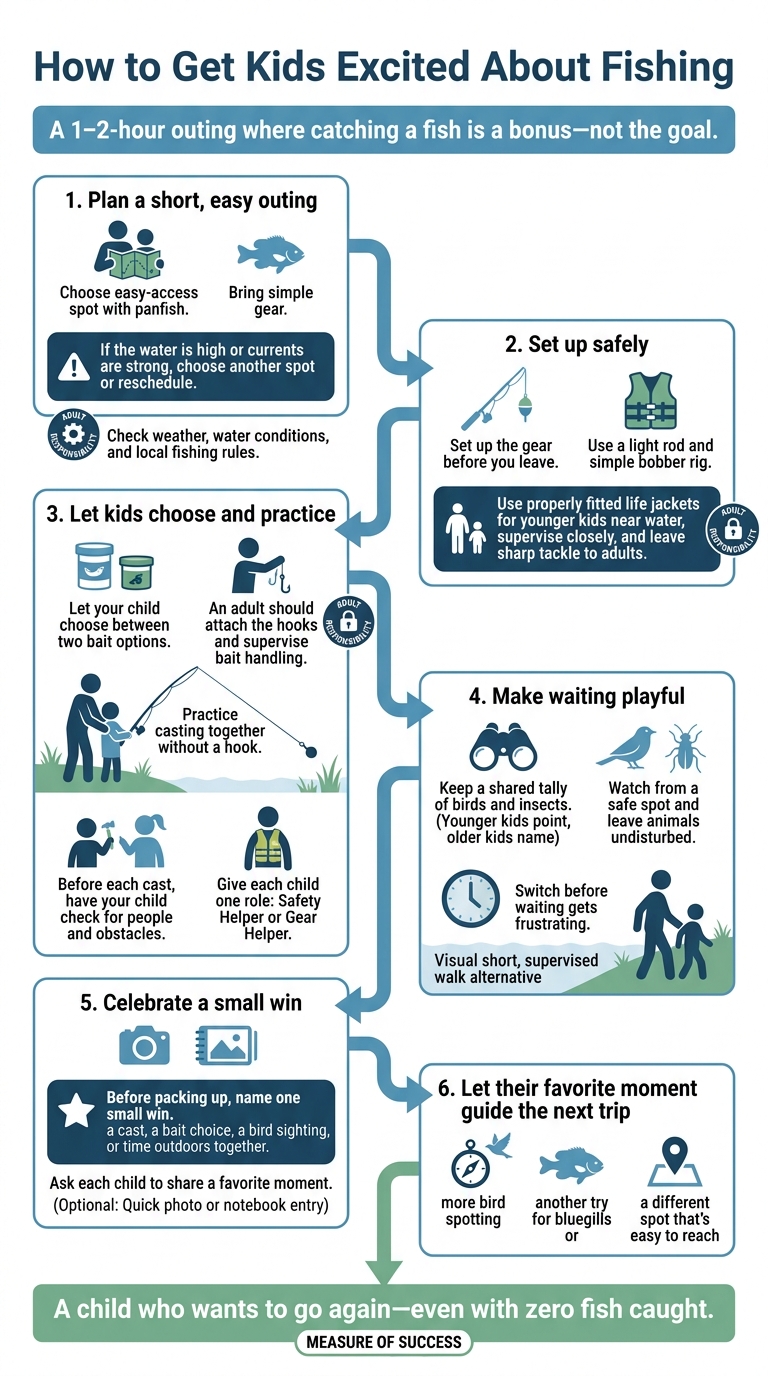
I’d start with a 1–2-hour outing where catching a fish is a bonus - not the goal. Choose an easy-access spot with panfish, bring simple gear, and let your child pick bait and practice casting without a hook.
My plan is simple:
- Put safety first: Check weather, water conditions, and local fishing rules. Use properly fitted life jackets for younger kids near water, supervise closely, and leave sharp tackle to adults.
- Keep it playful: Give kids a small job, spot wildlife together, and take breaks before waiting becomes frustrating.
- End on a good memory: Celebrate a cast, a bird sighting, or time together. Let their favorite moment guide the next trip.
<u>My measure of success:</u> a child who wants to go again - even with zero fish caught.
How to Get Kids Excited About Fishing
Fishing 101: Fishing with Kids
sbb-itb-d0a8c9d
Get Kids Involved in Bait and Casting
Set up the gear before you leave so kids can get started as soon as you reach the water. Give them a few simple jobs, but handle sharp tackle yourself.
Choose a Light Rod and Simple Bobber Rig
Let your child choose between two bait options. An adult should attach the hooks and supervise bait handling.
Once your child picks the bait, move on to hook-free casting practice.
Practice Hook-Free Casting and Give Kids Jobs
Practice casting together without a hook. Before each cast, have your child check for people and obstacles.
Give your child one simple role: Safety Helper or Gear Helper. Having a job keeps them involved.
Fill Waiting Time With Nature Games
When the fish slow down, pass the time with quick spotting games.
Play Fish and Wildlife Spotting Games
Keep a shared tally of birds and insects. Younger kids can point out what they find, while older kids can name them. Watch from a safe spot and leave animals undisturbed.
Birds diving over the water may signal fish feeding on bait near the surface. Treat it as a clue, not a promise of a bite. You can also look for shed cicada skins or listen together for insect calls.
Switch Activities When Bites Slow Down
Switch before waiting gets frustrating. Between casts, take a short, supervised shoreline walk to look for insects, birds, or lichens. Let the group’s curiosity set the pace.
If the walk stops holding their interest, change the scene again. During a fishing break, a shallow stream walk is an option only in safe, low water with close adult supervision. Otherwise, stay on shore and watch from there. Give kids room to look around without pressure.
Keep Kids Safe and Comfortable
Set Rules for Water, Hooks, and Fish Handling
Once the rods are out, take a moment to check safety. If the water is high or currents are strong, choose another spot or reschedule. Give kids clear rules: stay within arm’s reach of the adult and stop when asked. Simple rules help keep the trip relaxed so kids can focus on the fun.
Leave hooks and other sharp gear to adults. Once an adult secures the catch, kids can help spot it. That keeps them involved without handling sharp gear.
Next, pack for comfort to help kids stay happy longer.
Conclusion: Celebrate a Small Win
Before packing up, name one small win: a cast, a bait choice, a bird sighting, or time outdoors together. A child doesn’t need to match anyone else’s catch.
Ask each child to share a favorite moment. If they want, take a quick photo or write it in a notebook. A favorite snack or treat afterward can make the outing feel special - even if no one caught a fish. That memory can help shape the next trip.
Next time, plan around what each child enjoyed most: more bird spotting, another try for bluegills, or a different spot that’s easy to reach.
FAQs
What fishing gear fits my child’s age?
The search results don’t recommend specific fishing gear for your child’s age.
How can I find kid-friendly fishing spots?
Look for state park ponds with dedicated youth fishing areas. Local sports clubs or community organizations may also maintain private ponds that offer safe, controlled settings for beginners.
Choose spots with easy shoreline access and a good chance of catching small, active fish like bluegill. Those bites can help keep kids interested. Check with local parks departments or browse community event calendars for welcoming, family-friendly fishing days.
Does my child need a fishing license?
Whether your child needs a fishing license depends on their age and the state where you’re fishing. Many states let children under a certain age fish without a license. Older kids may need one at a reduced cost.
Before you head out, check the official website of the state’s department of natural resources or wildlife agency. That way, you can follow local laws and enjoy a fun, screen-free day by the water.