

Youth hockey can take over your life from August to March, with early practices, late-night games, and weekend tournaments. It’s a whirlwind of schedules, costs, and emotions. Here’s how to stay organized, manage expenses, and support your child without losing your sanity:
- Plan Ahead: Use shared digital calendars to track practices, games, and tournaments. Color-code events and factor in travel time to avoid last-minute stress.
- Budget Wisely: Youth hockey costs an average of $2,583 annually. Save by buying used gear, registering early for discounts, and volunteering for fee reductions. Focus spending on essentials like helmets and skates.
- Stay Organized: Air out gear after every use to prevent odors and damage. Label everything to avoid mix-ups, and keep a small repair kit handy for game days.
- Balance School, Sleep, and Hockey: Skip optional practices when schedules get overwhelming. Build good communication with teachers and prioritize rest for your child.
- Game Day Prep: Pack essentials like snacks, extra gear, and a first-aid kit. Arrive early, and dress warmly for cold rinks.
- Support Your Child: Focus on effort and growth rather than wins. Avoid adding pressure, and encourage a balance of sports and family time.
Youth hockey is demanding but rewarding. By staying organized, managing costs, and focusing on your child’s experience, you can make the season memorable for the whole family.
Planning Your Season and Managing Time
Setting Up Your Family Hockey Calendar
In August, take some time to map out your hockey season by entering all tournament dates, game times, and practices into a shared digital calendar. Make sure it syncs across devices so everyone in the family stays on the same page. Add in work, school, and other appointments to get a clear picture of your overall schedule. To make things easier, use color-coding - assign one color for practices, another for games, and a separate one for family activities. This helps you quickly identify potential conflicts. As Ice Hockey Moms puts it:
"By having a visual representation of the schedule, parents can better plan their own commitments around these events."
Don’t forget to factor in travel time for trips to the rink. For example, if the rink is 30 minutes away, plan your departure time accordingly to avoid last-minute scrambles. Many families also find it helpful to keep a physical calendar in a high-traffic area, like the kitchen, as a backup. Another handy tool? A team management app that tracks schedules and player availability. Once your calendar is set, you can shift your attention to juggling school, sleep, and hockey.
Managing School, Sleep, and Hockey Schedules
When time feels tight, focus on the essentials: sleep, schoolwork, and mandatory practices. If things get too hectic, it’s okay to skip optional skate sessions. Build good communication with your child’s teachers early in the season. Let them know about travel commitments and, if possible, ask for assignments ahead of time so your child can stay on top of schoolwork during road trips.
Establish a simple night-before routine to reduce morning chaos. Have your child pack their hockey bag and lay out clothes for the next day. This not only saves time but also helps foster independence. While your child is at practice, use that time for yourself - whether it’s a quick walk, catching up on reading, or just enjoying a quiet moment. You can also coordinate carpools through your team’s app to cut down on driving and build a sense of community with other parents.
Preparing for Travel and Tournament Weekends
Get ahead by packing the night before, using a checklist to ensure nothing gets left behind. Essentials include home and away jerseys, extra tape, spare laces, water bottles, and healthy snacks. Label every piece of gear with your child’s name - tournament dressing rooms can get chaotic, and this helps avoid mix-ups. As soon as the tournament schedule is available, add it to your calendar and include a 15-minute buffer beyond the coach’s requested arrival time. Look up travel routes in advance and check hotel reviews to ensure a safe and comfortable stay.
Instead of relying on rink concessions, pack meals and snacks ahead of time. Protein-rich foods, fruits, and plenty of water will help keep your child energized for back-to-back games. Plan for quick laundry sessions to wash jerseys and base layers between games, and try to carve out some downtime to explore the tournament city or enjoy a meal at a local restaurant. These small moments can turn a packed weekend into cherished family memories. Lastly, stay in touch with other parents to arrange backup carpooling in case of unexpected changes - because flexibility is key during tournament season.
Managing Costs and Equipment
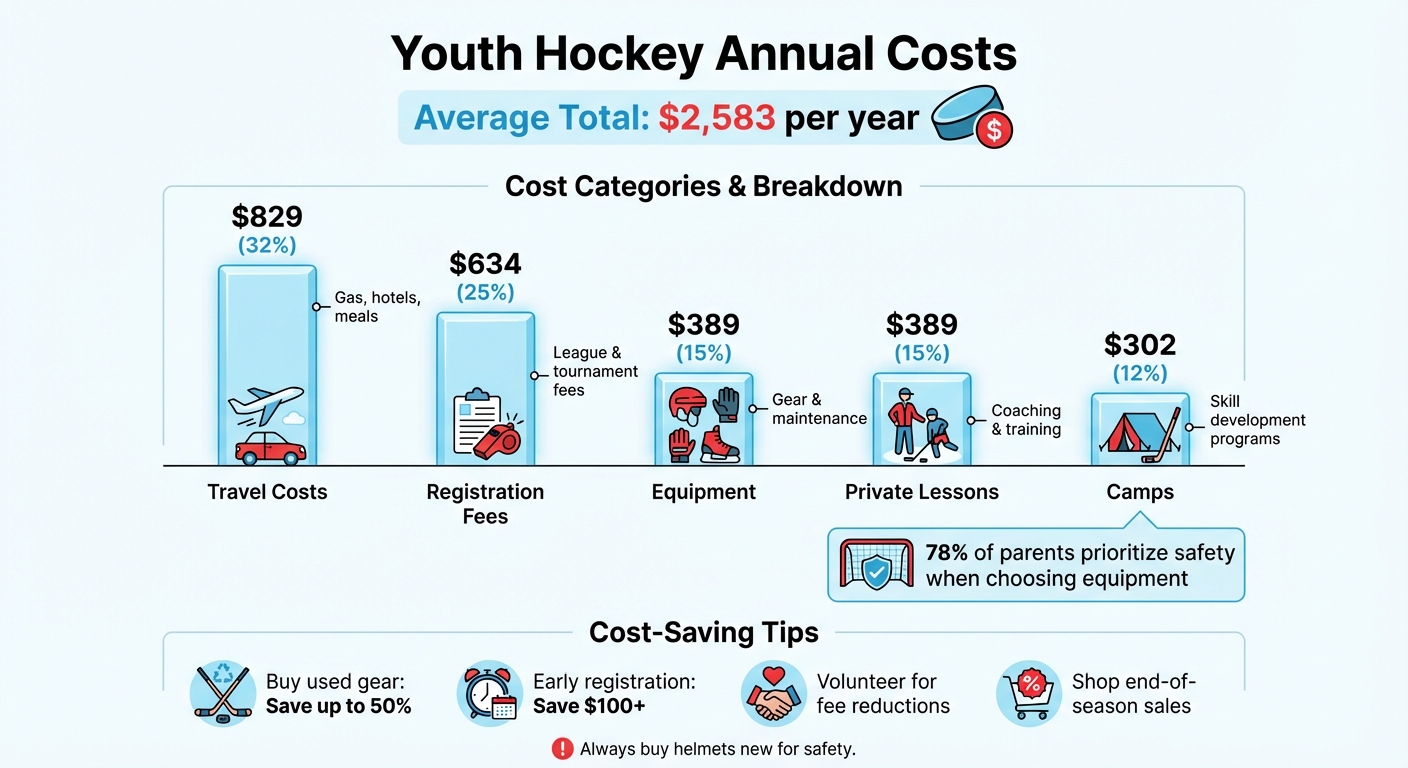
Youth Hockey Annual Costs Breakdown: Average $2,583 Per Year
Once you've mapped out your season, keeping a close eye on expenses becomes just as important.
Setting Up Your Hockey Budget
Youth hockey ranks among the most expensive sports in the U.S., with families shelling out an average of $2,583 per year. Travel costs top the list at $829 annually, followed by registration fees ($634), equipment ($389), private lessons ($389), and camps ($302). To stay ahead of these expenses, ask your hockey organization for a detailed cost breakdown and consider opening a dedicated savings account to cover hockey-related costs. This kind of planning can help ensure your child's hockey experience doesn't create financial surprises down the road.
Some organizations offer discounts on registration fees if parents volunteer as a coach, team manager, or board member. Additionally, registering early can often save $100 or more per child through early-bird discounts. Financial advisor Chris Toadvine advises parents to stay realistic about their spending:
Parents have to let their budget dictate what is possible. Spending money that they cannot afford on elite sports camps and programs is not an expression of love if the parent ends up being dependent on their child later in life.
Using the 50/30/20 budgeting rule can also help: allocate 50% of your income for essentials, 30% for discretionary spending, and 20% for savings.
Buying and Caring for Hockey Gear
A full set of hockey gear includes a HECC-certified helmet with a cage, neck guard (required for youth starting August 1, 2024), mouthguard, shoulder pads, elbow pads, gloves, hockey pants, shin guards, and a jock or jill. Focus your spending on a certified helmet and well-fitted skates, as these are the most critical items for safety and performance. A complete set of gear typically costs between $150 and $300. According to a survey, 78% of parents prioritize safety when choosing equipment.
When it comes to skates, proper fit is key. They should be snug, generally 1 to 1.5 sizes smaller than your child's regular shoe size. Scott Aldrich, USA Hockey's manager of hockey operations, stresses the importance of this:
We see kids with skates that are two sizes too big and they don't have an opportunity to develop their skating fundamentals correctly... it just makes it harder for them to succeed on the ice.
For hockey sticks, choose one with a flex rating that's about half your child's body weight. For instance, a 40-flex stick suits an 80-pound player. Jay Wilson, a hockey equipment retailer, advises against overspending on extras:
Don't overpay for bells and whistles as a beginner. Focus budget on skates, helmet, and other essentials first before upgrading sticks and accessories.
To extend the life of your gear, air it out and dry it immediately after each use. Wipe skate blades with cloth soakers and remove the insoles to prevent rust on the rivets. Most soft gear, like gloves and shin guard liners, can be machine washed on a gentle cycle - just avoid bleach and fasten Velcro straps beforehand to prevent damage.
Ways to Reduce Hockey Expenses
Buying used gear for items like shin guards, shoulder pads, and pants can save you up to 50% compared to buying new. Stores like Play It Again Sports or community sales are great places to start. Dominic Moore, a hockey dad, suggests:
Join players leaving a league or team – you can often score lightly used gear for 50% off retail as kids outgrow equipment.
However, helmets should always be purchased new to ensure they meet current safety standards and haven't been compromised. Look for the HECC sticker on the back to confirm the helmet is still certified.
If you're looking to cut costs further, check out rental programs like Rink Rat Rentals, which provide full sets of gear for a seasonal fee and even deliver them to your door. Another tip: shop during end-of-season sales in March or April or hunt for last year's models online. These often include similar safety features but come at a discounted price. Christine Wilson, a hockey coach, recommends:
Check manufacturer clearance sections online or visit outlet stores in person during off-seasons. You can grab previous year stock for great deals.
Finally, consider making high-ticket items like premium sticks or skates birthday or holiday gifts to help spread out the costs.
Game Day and Rink Preparation
Getting Ready for Game Day
The night before the game is all about preparation. Double-check that the hockey bag is packed with all the essentials - base layers, gear, and any other necessary equipment. Make sure the skates were sharpened a day or two earlier to avoid any last-minute surprises. On game day, aim to arrive at the rink at least 30 minutes before ice time. For nutrition, pack high-energy, portable snacks and a water bottle with a long, flexible straw. This way, your child can stay hydrated without needing to remove their helmet during breaks. Once the essentials are squared away, focus on gathering everything you’ll need for the rink.
What to Bring to the Rink
Being prepared for the unexpected is part of every hockey parent’s routine. Keep a small "supply bag" tucked inside the hockey bag with items like stick tape, clear shin pad tape, spare laces, scissors, and a Phillips-head screwdriver for quick helmet adjustments. These tools can be lifesavers when last-minute gear fixes are needed. For your own comfort, bring a blanket, hand warmers, and a thermos to fend off the cold. Snacks like trail mix, apples, or granola bars are great for keeping energy levels up. A basic first-aid kit with essentials like bandaids, ice packs, and hand sanitizer is also a must-have. Don’t forget to carry spare change for vending machines and a portable phone charger to stay connected.
Dressing for Comfort and Style at the Rink
Comfort is just as important as preparation when spending time in chilly rinks. Layering is your best friend. As Source for Sports points out:
Usually local rinks are a little on the chilly side so you'll want to layer your clothing so that in the off-chance you get a little warm, you can peel off layers.
Start with a moisture-wicking base layer to keep sweat at bay, then add a fleece or sweater for warmth. Finish with a jacket that’s easy to remove if needed. For headwear, a BirdFish trucker hat is a good option for warmer days or well-heated rinks, while a BirdFish beanie is perfect for colder arenas or winter tournaments. Both options balance warmth with style. And don’t forget to bring a blanket for those especially frosty games.
Supporting Your Child's Growth and Health
Giving Your Child Emotional Support
Building mental resilience is a skill that comes with consistent practice, much like perfecting a slap shot. Instead of focusing solely on outcomes like wins, emphasize the effort, attitude, and specific improvements your child shows along the way. For example, after a game, ask questions like, "What did you learn today?" or "What challenges did you face?" These kinds of "Great Growth" questions shift the focus to controllable factors like preparation and practice, helping to instill lasting confidence.
It's also important to avoid "snowplow parenting", where you clear every obstacle in your child's path. Facing challenges head-on is a key part of building resilience. In high-pressure situations, some athletes find it helpful to adopt a mantra or a specific mindset, such as thinking of themselves as a "Warrior", to stay calm and focused. Experts also suggest incorporating 30 minutes of daily meditation or visualization to enhance mental clarity and emotional growth. These habits not only foster emotional strength but also contribute to a more balanced family dynamic.
Keeping Family Life Balanced
Hockey can easily dominate family life, especially when juggling the needs of other children. To keep things balanced, try maintaining regular family traditions like Sunday dinners, game nights, or weekend breakfasts. These rituals ensure that siblings don’t feel overlooked amidst the hustle of practices and games.
Dr. David Soma from Mayo Clinic underscores the importance of keeping perspective in youth sports:
"If the reason why you're having your kids do sports is to have them get accolades and fame and scholarship, then you're in it for the wrong reason."
He also advises parents to be mindful of the pressure they may unintentionally place on their kids:
"Support is a pressure... if you start sensing that your kid is less motivated to work out, they're not enjoying their participation, you really got to look inward and start thinking, 'man, am I putting extra pressure on the child'"
Encouraging your child to play multiple sports instead of focusing on hockey year-round can help reduce the risk of overuse injuries caused by repetitive stress. Plus, student athletes often adopt healthier habits, like getting at least seven hours of sleep and eating more fruits and vegetables. With emotional support and a balanced family routine, you can create a strong foundation for your child’s well-being.
Protecting Player Safety and Recovery
Recovery plays a critical role in athletic performance. Before games, aim for a high-carb, moderate-protein meal 3–4 hours before puck drop - think grilled chicken with brown rice or pasta with tomato sauce. During the game, staying hydrated is equally important. Players should drink 5–10 ounces of water or a sports drink every 15–20 minutes to replace fluids lost through sweat.
Post-game recovery is just as essential. Within 30–60 minutes of finishing, provide a snack that includes 20g of protein and 50g of carbs. A combination like chocolate milk, a peanut butter sandwich, and fruit works well to meet these needs. Research also shows that youth athletes who sleep 8–10 hours a night perform better and maintain better mental health.
When it comes to concussion safety, quick action is key. If you suspect a concussion, remove your child from play immediately, as proper recovery is crucial to avoid long-term complications. Watch for signs of overtraining or burnout, such as persistent fatigue, chronic pain, or a loss of enthusiasm for the sport. Dr. Soma offers this advice:
"If you're having to push through pain constantly, this is probably an indication to get some help."
Sports injuries account for one in three childhood injuries. Simple steps like monitoring hydration - ensuring urine stays pale yellow - can go a long way in supporting recovery and maintaining overall health.
sbb-itb-d0a8c9d
Staying Organized Through the Season
Organizing Equipment and Documents
Keeping hockey gear in check is a must for any season. After each use, take everything out of the bag and let it air out. This simple habit helps prevent bacteria buildup and those unpleasant odors that can linger. Tony DaCosta, Equipment Manager for the Minnesota Wild, puts it plainly:
"It should be your kids' responsibility to air out their equipment. Have them take all of it out of their bag and air dry after each use."
A drying station can make this process easier. Use a metal or fabric rack and set up a fan to blow directly on the gear. This not only speeds up drying but also helps keep the smell at bay. For skates, remove the insoles after each use. This simple step cuts drying time in half and helps extend the life of the skates. To avoid mix-ups in busy locker rooms, label every piece of equipment with your child's name.
Consider investing in a rolling hockey bag for easier transport. Inside, stash a small essentials kit with items like tape, scissors, extra laces, and a helmet repair kit. Staying organized off the ice is just as important - use a shared digital calendar and a cloud folder to keep track of schedules and store key documents like league rules, registration forms, and safety guidelines.
Once the gear and paperwork are in order, it’s time to focus on managing the emotional challenges of the season.
Handling Stress as a Hockey Parent
Hockey schedules can feel overwhelming, but focusing on what you can control can make a big difference. Use practice time to recharge yourself - whether it’s going for a walk, catching up on reading, or just chatting with other parents. To lighten the load, coordinate carpools and share babysitting duties with other families.
Dealing with challenging parents at games? Stay above the fray. Respond with positive comments about teamwork or politely remove yourself from the conversation. Keep your family’s priorities front and center. Ice Hockey Moms offers this helpful reminder:
"Being clear on your family's priorities and values allows you to stress less about your decisions when shuffling must be done or even skipped."
Focus on non-negotiables like health, school, and family time, and don’t hesitate to let lower-priority tasks slide during the busiest parts of the season. It’s also okay to say no to optional practices or events if the schedule feels too packed.
When stress starts to affect your family’s balance or your child’s enjoyment of the game, it’s time to reassess.
Recognizing When to Scale Back
Pay attention to signs that your child might be struggling. Decreased motivation, constant fatigue, or feelings of being overwhelmed could all be indicators. Ice Hockey Moms highlights the importance of boundaries:
"Parents need to strike a balance between being involved and allowing their children to take ownership of their hockey journey. We are the parents, but this is not our journey."
If you notice these warning signs, prioritize rest over additional practices or games. Community hockey programs that emphasize inclusivity and skill-building often create a healthier environment than elite travel leagues focused on high-stakes performance. Shifting the focus from performance pressure to personal growth can help your child rediscover their love for the game - and bring some much-needed calm to the entire family.
How Nature-Inspired Hats Fit Into Hockey Life
Using Nature-Themed Hats for Hockey Activities
Hockey season means juggling a packed schedule from August to March, with pre-dawn practices and long days at the rink. In those early morning rushes, a BirdFish trucker hat can be a quick grab for style, while a cozy beanie is perfect for keeping warm in chilly arenas. Spending hours in cold rinks calls for dependable warmth, and a beanie does the job during those frosty sessions. On the other hand, when you're traveling for tournaments or dealing with warmer conditions, a breathable trucker hat is a smart choice. These nature-inspired hats combine comfort and practicality, making them a go-to for busy hockey parents.
Players can also make good use of hats off the ice. Whether it’s dryland training, post-game travel, or outdoor team events like fundraisers or backyard rink hangouts, hats are a functional accessory. A flat bill hat, for example, keeps hair in check while adding a bit of warmth for the ride home. Plus, the nature-inspired designs from BirdFish bring a personal touch to team gatherings. With a variety of hats on hand, you’ll always be ready for whatever hockey life throws your way.
Creating a Hat Collection for Different Situations
Just like organizing gear and paperwork for the season, building a small hat collection can make your daily routine smoother. Having a few options means you're ready for any hockey scenario. Packing them the night before can save you from scrambling during those early morning departures. A warm beanie is a rink bag essential - especially in community rinks where the cold can be biting. For weekend tournaments and long travel days, a BirdFish trucker hat is a reliable pick for comfort and style.
To avoid mix-ups in crowded spectator areas, consider labeling your hats and other personal items. The hockey community thrives on shared experiences, and wearing distinct, stylish gear like nature-themed hats can even spark conversations and build connections with other parents. As Ice Hockey Moms puts it:
From coordinating carpools to ensure everyone makes it to early morning practices, to organizing team snacks that keep the kids fueled and focused, hockey parents wear many hats.
Choosing the right hat for the right moment can simplify your game day prep and keep you focused on what matters most.
Comparing Different Hat Types
| Hat Type | Warmth Level | Breathability | Best Hockey Use Case |
|---|---|---|---|
| Beanie | High | Low | Cold rinks |
| BirdFish Trucker Hat | Low | High | Travel and outdoor events |
| BirdFish Flat Bill Hat | Moderate | Moderate | Post-game meals and social events |
Each hat style has its role during the season. Beanies are your best bet for staying warm during those freezing early morning practices, while BirdFish trucker hats shine during travel days and outdoor events, thanks to their breathable design. Flat bill hats strike a balance between style and function, making them a great choice for post-game hangouts and community events. With the right hat for every occasion, you’ll be ready to tackle the season in comfort and style.
Conclusion: Making the Most of Your Hockey Parent Experience
Being a hockey parent is a whirlwind of packed schedules, rink-side hours, and financial juggling. But at its core, it's about creating memories that will stay with you and your child forever. The tips in this guide aim to simplify the chaos, making it easier to focus on what truly matters. And remember, your attitude plays a bigger role than anything else in shaping your child's experience. As Cyclone Hockey wisely states:
Your child's hockey experience will be influenced by many factors, but nothing will influence that experience more than you.
Your support and perspective are the cornerstone of your child's hockey journey. Celebrate their effort and growth rather than fixating on scores or stats. Let the coaches do their job, giving your child the space to learn and grow on their own. Lean on your hockey community - whether it's sharing rides or dividing responsibilities with other parents, teamwork off the ice is just as important as on it. Research even shows that focusing on effort instead of results helps kids build lasting confidence to tackle new challenges.
The truth is, these youth hockey seasons are fleeting. Before long, those early morning drives and weekend tournaments will be memories you’ll hold dear. Cyclone Hockey captures it perfectly:
Life moves fast and time passes quickly. Soon your child will be grown and you'll wish you could return to these days, if just for a moment. So savor these seasons, don't rush them.
Take a pause to appreciate the journey. The friendships formed, the lessons in perseverance, and the shared moments with your child are what make all the effort worthwhile. As the next season begins, embrace the chaos and joy that come with it - these are the days you’ll look back on with a smile.
FAQs
How can I help my child balance hockey and school responsibilities?
Balancing hockey and school can be a challenge, but a shared family calendar can make a world of difference. Opt for a cloud-based calendar that everyone in the family can access and update. Add in practices, games, school deadlines, and other commitments, and use color-coding or symbols to keep hockey and school events easy to differentiate. This way, you can quickly spot any scheduling conflicts and address them before they become an issue.
Carve out dedicated homework time during weekdays, ideally right after school and before practice. Treat this time as non-negotiable, much like a practice session. Minimize distractions, have some snacks on hand, and stick to the routine. If a late-night game throws off the schedule, plan a make-up study session for the next day or the weekend to stay on track.
Get your child involved in the planning process by reviewing their school priorities together. This not only helps them take responsibility for their time but also ensures they stay on top of assignments. With a little organization, a commitment to study time, and open communication with coaches when needed, your child can thrive both on the ice and in the classroom without feeling stretched too thin.
How can I save money on youth hockey expenses?
Youth hockey can be pricey, but there are plenty of smart ways to keep costs down without compromising your child’s enjoyment. Start by focusing on the must-have gear - like a reliable helmet and skates - and add other items gradually as needed. For affordable options, explore used-equipment resources such as local buy-and-sell groups, gear swaps, or stores with pre-owned sections. Some leagues even provide rental programs or equipment loans, which can help you avoid hefty upfront expenses.
Beyond gear, you can save money by getting involved. Many leagues offer discounted registration fees for parents who volunteer with the team. Joining team fundraisers, like auctions or merchandise sales, is another way to help cover costs. Planning ahead also makes a big difference - spread out major purchases, take advantage of end-of-season sales, and set a clear budget to manage fees, travel, and other expenses. A little effort can make hockey more affordable and just as rewarding!
How can I help my child stay emotionally balanced during a busy hockey season?
Supporting your child’s emotional well-being during a busy hockey season begins with fostering a positive and supportive atmosphere. Let them know you’re proud of their effort no matter the result, and remind them it’s perfectly normal to feel nervous. During games, stay composed, avoid “sideline coaching,” and focus on cheering for displays of skill and good sportsmanship. After the game, take time to listen to their thoughts by asking open-ended questions like, “What did you find most challenging today?” Offer support, but resist the urge to immediately solve every issue they bring up.
To help manage the demands of the season, stay organized. A shared calendar can keep track of practices, games, and travel plans, while also helping you budget for equipment costs (which can range from $250 to $500). Make sure to carve out time for family activities unrelated to hockey - whether it’s a movie night or a fun day out - to give your child a chance to relax and recharge. By balancing encouragement, open communication, and downtime, you can provide a steady, nurturing environment that supports their growth both on and off the rink.