
I’d start with smallmouth bass for all-around fishing or northern pike for an October trip. Among these 5 targets, your best choice depends on the season, river stretch, and whether you prefer lures or bait.
I’d use this quick comparison to narrow down the options:
Quick Comparison
| Fish | Best for | Timing and location | Bait or tackle |
|---|---|---|---|
| Smallmouth bass | All-around action | Late spring through early fall; rocky upper and middle river stretches | Soft plastics, tube jigs, crankbaits |
| Striped bass | Powerful fights | Check local runs and access | Heavier tackle; verify bait rules |
| Channel catfish | Beginner bait fishing | After dark; slower, deeper water | Bottom rig with worms |
| Northern pike | Hard predator strikes | Spring and fall; weedy margins and backwaters | Spoons, jerkbaits, wire leader |
| American shad | Spring-run fishing | Spring; check run reports and legal access | Check local tackle rules |
For October 2, 2026, I’d leave shad off my list and check current reports before choosing the other targets. <u>Before fishing, I’d verify the rules for the exact river stretch</u> - including licenses, seasons, length limits, and daily limits.
And if I planned to keep fish? I’d check consumption advisories, too. Legal to keep doesn’t always mean safe to eat.
Fishing for Connecticut Catfish
sbb-itb-d0a8c9d
1. Smallmouth Bass
Smallmouth bass are the most reliable starting point on the Connecticut River. They use a range of habitats and respond to several lure types, giving you plenty of ways to fish for them.
Seasonal Availability
Fishing for smallmouth bass is most productive from late spring through early fall.
Best baits and lures: soft plastics, tube jigs, crankbaits, and spinnerbaits.
River Sections and Habitats
Focus on the upper and middle river, targeting rocky banks, seams, ledges, gravel beds, and island edges.
For heavier water and bigger runs, turn next to striped bass.
2. Striped Bass
These sources don’t confirm striped bass season timing, river habitats, fighting style, tackle, or fishing rules. If targeting striped bass isn’t feasible, switch to channel catfish.
3. Channel Catfish
Channel catfish are a simple bait-and-bottom option for steady action. The best timing depends on the river reach.
Seasonal Availability
Channel catfish offer steady bottom fishing. Fish after dark when the river slows for the best results.
River Sections and Habitats
Look for slower, deeper water, current edges, and stretches with soft bottoms.
Fighting Ability and Angler Fit
Channel catfish suit beginners who enjoy simple bait fishing more than anglers looking for hard, fast fights.
Bait and Tackle
Worms and silkworms are common baits for catfish. Check current consumption advisories before keeping any fish.
For a more aggressive predator bite, move next to northern pike.
4. Northern Pike
Northern pike are the river’s toothy predators, with a bite that calls for the right gear.
Seasonal Availability
Spring and fall offer the best northern pike fishing in the Connecticut River. In summer, stick to cooler refuges.
River Sections and Habitats
Target weedy margins, connected backwaters, and tributary mouths. Pike also often hold in slow water along deep channel edges.
Fighting Ability and Angler Fit
Expect hard strikes, sharp teeth, and fast runs. Beginners should be prepared for all three before targeting pike. Choose gear that can handle their teeth and hard runs.
Bait and Tackle
Use spoons, spinnerbaits, jerkbaits, or large soft swimbaits with a wire leader.
Before keeping pike, check current state size and bag limits, along with any consumption advisories.
5. American Shad
The supplied sources don’t confirm a full American Shad profile. Before fishing, check current river reports, access notices, and state regulations.
Seasonal Availability
Use current river reports to check shad run timing, water temperature, and flow.
River Sections and Habitats
Before targeting tailrace water, confirm public access and any fishing restrictions.
Fighting Ability and Angler Fit
Beginners should pick a spot with safe bank access.
Bait and Tackle
Before keeping fish, check current Massachusetts and Connecticut rules for licenses, size limits, possession limits, and fish advisories.
Next, compare all five fish by season, location, fight, and tackle.
Compare Seasons, Locations, Fights, and Tackle
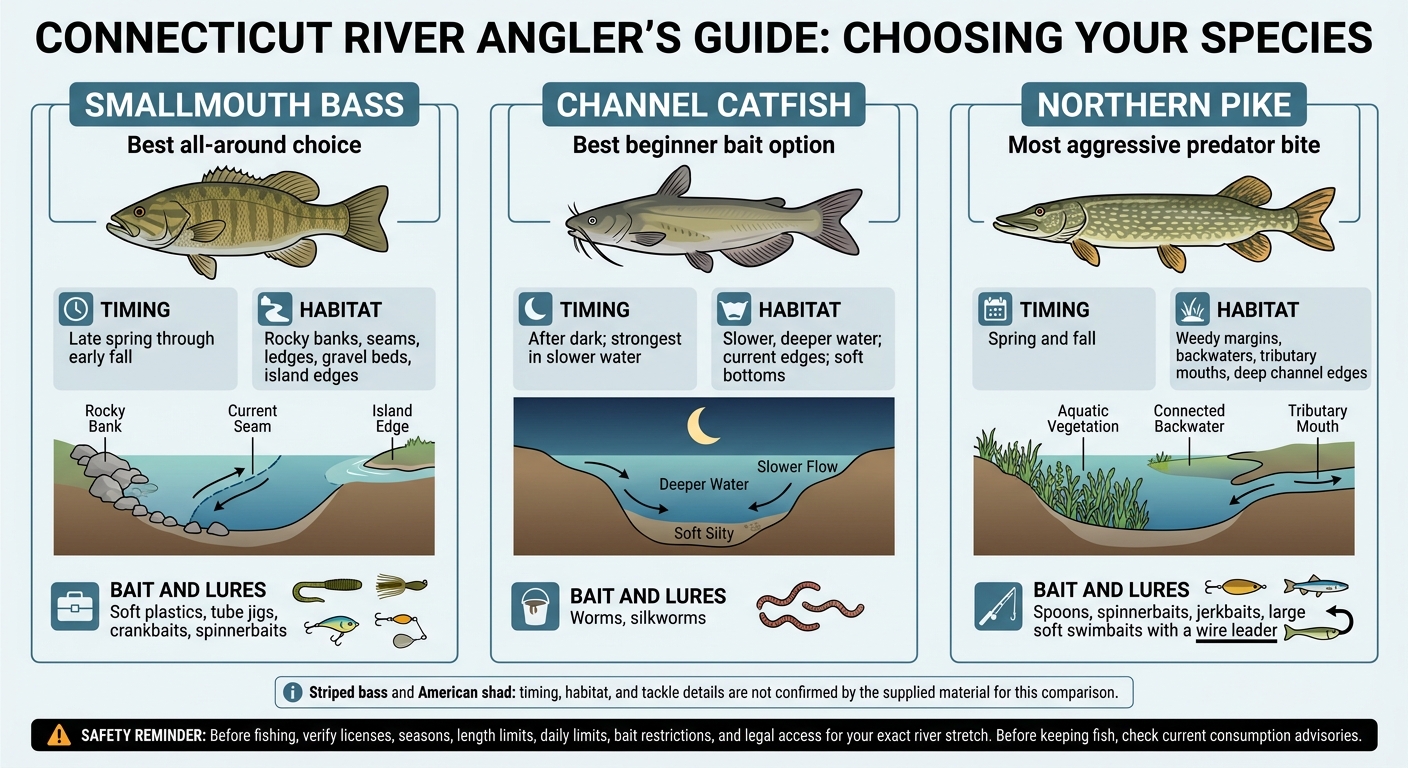
Connecticut River Fishing: Compare Three Top Targets
Use the species documented above to choose your target based on season, water type, and tackle. Only smallmouth bass, channel catfish, and northern pike have source-backed timing details in this section.
| Target and angler fit | Timing | Habitat | Bait and lures |
|---|---|---|---|
| Smallmouth bass: best all-around choice | Late spring through early fall | Rocky banks, seams, ledges, gravel beds, island edges | Soft plastics, tube jigs, crankbaits, spinnerbaits |
| Channel catfish: best beginner bait option | After dark; strongest in slower water | Slower, deeper water; current edges; soft bottoms | Worms, silkworms |
| Northern pike: most aggressive predator bite | Spring and fall | Weedy margins, backwaters, tributary mouths, deep channel edges | Spoons, spinnerbaits, jerkbaits, large soft swimbaits with a wire leader |
Striped bass and American shad aren't covered in the supplied material. Stick to the documented details - don't add unsupported lure sizes, depths, line strengths, or landing gear.
Next, weigh each target against harvest rules and your keep-or-release decision.
Pros, Cons, and Harvest Rules
Before keeping any fish, check the current rules for black bass, channel catfish, and northern pike.
| Species | Advantage | Limitation | Handling | Harvest check |
|---|---|---|---|---|
| Smallmouth bass | Best all-around target for release-first fishing | Exact black bass harvest rules are not provided | Measure accurately and release promptly with minimal handling | Verify the season, minimum length, and daily limit for your river reach |
| Striped bass | Best trophy target for limited harvest | The slot limit requires precise measurement | Use a flat measuring board and circle hooks when bait fishing | One fish daily, at least 28 inches but less than 31 inches |
| Channel catfish | Best low-pressure target for keep-or-release fishing | Exact harvest rules are not provided | Minimize handling and chill lawful catches immediately | Verify applicable length and daily limits |
| Northern pike | Best target for an aggressive predator | Exact harvest rules are not provided | Release promptly and give spawning fish extra care | Verify the season, length, and daily limits |
| American shad | Best spring-run target | Harvest is restricted to the Connecticut River and its tributaries | Keep fish in the water during hook removal when possible | Six American and hickory shad combined daily |
Once you’ve checked the legal limits, choose a target that fits your season, access, and fishing style.
Pre-trip checklist: Confirm that you have the correct inland or marine license for each stretch you fish. Check open seasons, length requirements, daily limits, bait restrictions, and legal access.
Legal to keep does not mean safe to eat. Before keeping fish for dinner, check current consumption advisories for that river reach and species. Mercury or PCB guidance may restrict how much you should eat, even when harvest is lawful.
Release unwanted fish and those outside legal limits promptly with minimal handling. Immediately chill lawful catches you plan to eat. Give spawning fish extra care, and avoid disturbing spawning areas.
Choose the Best Fish for Your Trip
For an October trip, focus on smallmouth bass, northern pike, or striped bass where conditions support them. Use the table below to narrow down the five species compared above.
| Species | Best for | October filter | Tackle preparation | Rule check |
|---|---|---|---|---|
| Smallmouth bass | All-around sport | Choose accessible water where fish are currently active | Standard sport-fishing setup | Check local regulations |
| Striped bass | Powerful fights and larger fish | Confirm local runs and access before targeting them | Bring heavier tackle | Check local regulations |
| Channel catfish | Beginner bait fishing | Fish slower water after dark; choose safe, legal access | Prepare a bait rig | Check local regulations |
| Northern pike | Predator strikes | Check local pike habitat | Bring release tools | Check local regulations |
| American shad | - | Spring run only; skip for October | - | - |
Match your target to the season, available access, your tackle, and local regulations.
For striped bass, local timing and access matter more than the calendar. Before fishing, check state rules, size limits, bag limits, and consumption advisories for the exact stretch of water you plan to fish.
FAQs
How do river conditions affect which fish I should target?
The provided search results don’t explain how conditions in the Connecticut River affect which fish to target.
Is my fishing license valid across state lines?
Generally, no. Fishing licenses are issued by individual states, so you need a valid license for the state where you’re fishing.
The Connecticut River flows through multiple states. Before you fish, check each state’s rules and any reciprocal licensing agreements with its wildlife department or the state agency that oversees natural resources.
Where can I check current fish consumption advisories?
The provided search results don’t show where to find current fish consumption advisories for the Connecticut River.