
I’d start with bluegill or pumpkinseed for warm-weather shore fishing, yellow perch near weed lines, or stocked rainbow trout in cool water. These 4 fish work with simple, light tackle - but your best choice depends on the season, shore access, and what lives in the water.
Quick Comparison
| Fish | Where and when I’d target it | Simple setup | What kids can expect |
|---|---|---|---|
| Bluegill | Shallow pond edges in warm weather | Worm piece, small hook, bobber | Frequent bites |
| Pumpkinseed sunfish | Weedy pond edges in warm weather | Small worm piece, small hook, bobber | Colorful fish close to shore |
| Yellow perch | Lake weed lines near deeper water; morning or evening | Worm under a bobber | Repeated bites when you find a school |
| Stocked rainbow trout | Confirmed stocked ponds or streams in cool spring or fall weather | Worm, permitted PowerBait, or small spinner; 4–6 lb line | Good chances when stocking and water conditions line up |
Before taking kids out, I’d check public access, current fishing rules, adult license requirements, and stocking reports. I’d also choose stable footing, put kids in life jackets near the water, and let an adult handle hooks and spiny fins.
My goal: a short, enjoyable trip, not the biggest fish. <u>Check consumption advisories before keeping your catch.</u>
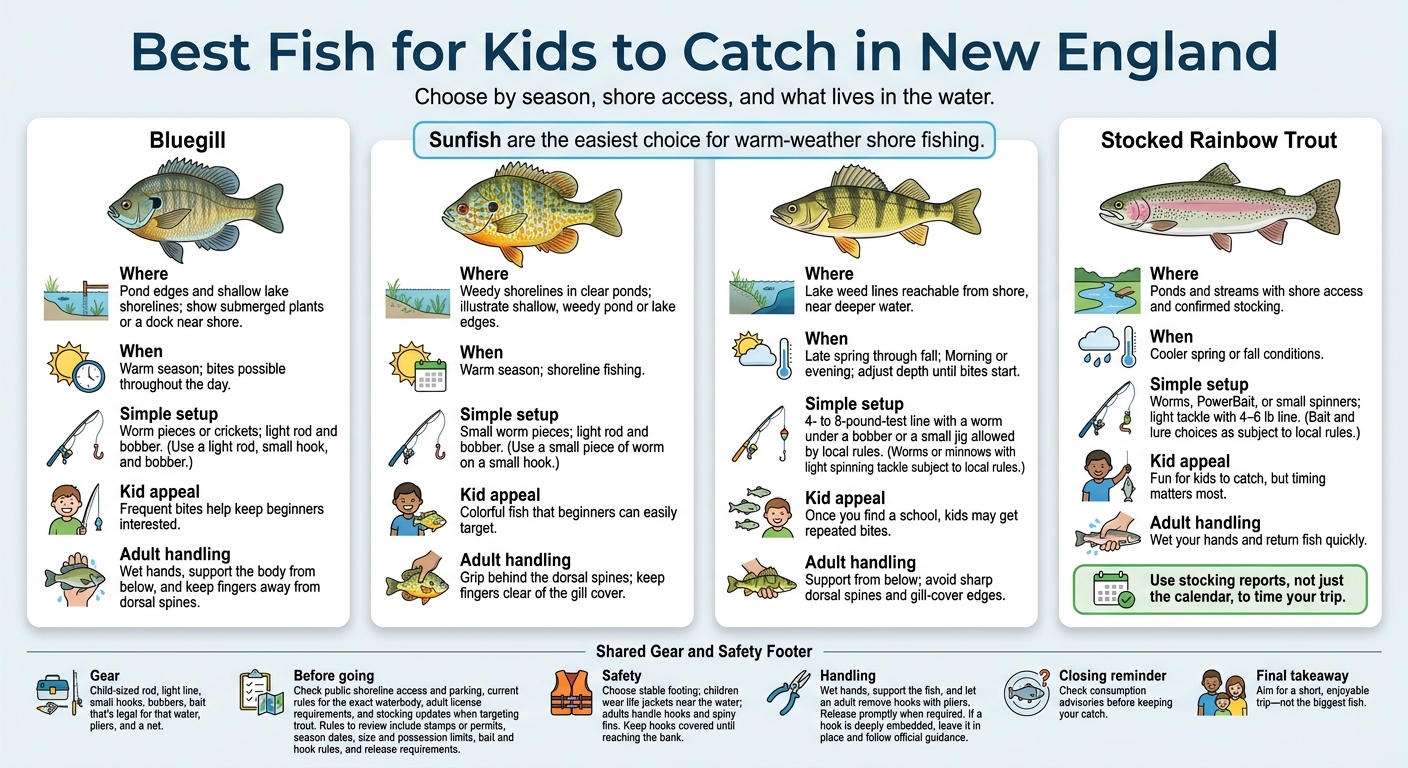
Best Fish for Kids to Catch in New England
Man spends every Sunday teaching kids how to fish
sbb-itb-d0a8c9d
Compare the Four Fish
| Fish | Where to fish | Best conditions | Simple bait and tackle | Appeal for kids | Handling tips |
|---|---|---|---|---|---|
| Bluegill | Pond edges and shallow lake shorelines | Warm season; bites possible throughout the day | Worm pieces or crickets; light rod and bobber | Frequent bites help keep beginners interested | Watch the dorsal spines. |
| Pumpkinseed sunfish | Weedy shorelines in clear ponds | Warm season; shoreline fishing | Small worm pieces; light rod and bobber | Colorful fish that beginners can easily target | Grip firmly behind the dorsal spines. |
| Yellow perch | Lake weed lines reachable from shore, near deeper water | Morning or evening; adjust depth until bites start | Worms or minnows; light spinning tackle | Once you find a school, kids may get repeated bites | Avoid the spiny fins and gill cover. |
| Stocked rainbow trout | Ponds and streams with shore access and confirmed stocking | Cooler spring or fall conditions | Worms, PowerBait, or small spinners; light tackle with 4–6 lb line | Fun for kids to catch, but timing matters most | Wet your hands and return fish quickly. |
Match your target fish to the season, water, and bait in the table. Sunfish are the easiest choice for warm-weather shore fishing. For perch, adjust your bait depth along the weed line when bites slow.
Trout call for a different plan than sunfish or perch: Use stocking reports, not just the calendar, to time your trip. Before picking a pond or stream, check your state wildlife agency’s stocking map. Look for cool water and confirmed stocking to make trout your best target.
1. Bluegill
Where and When to Fish
Start along shallow pond edges, where bluegill stay close to shore. Look near submerged plants or docks.
Simple Bait and Tackle
Keep your setup simple: a light rod, small hook, and bobber.
Why Bluegill Suit Kids
Bluegill bite often and are easy for kids to land, making them a good first fish.
Handling Tips and Fishing Rules
Wet your hands before handling the fish, support its body from below, and keep your fingers away from the dorsal spines. Before you go, check the current rules for that water and whether adults need a fishing license.
If bluegill are scarce, try looking for pumpkinseed in similar shallow pond water.
2. Pumpkinseed Sunfish
Where and When to Fish
In warm weather, fish the shallow, weedy edges of ponds and lakes. Start at shoreline spots that are easy to reach, including youth fishing ponds. Compared with bluegill, pumpkinseed often stay closer to weedier edges.
Simple Bait and Tackle
Use a small piece of worm on a small hook.
Why Pumpkinseed Sunfish Work for Kids
Pumpkinseed stay in shallow water near weedy shorelines, making them easy for beginners to target. Their small size also makes them easy for kids to handle once landed.
Handling Tips and Fishing Rules
Grip pumpkinseed behind the dorsal spines, and keep fingers clear of the gill cover. Check local fishing rules and adult licensing requirements before heading out.
3. Yellow Perch
Where and When to Fish
When shallow sunfish stop biting, try yellow perch along nearby weed lines and drop-offs. Fish ponds, lakes, reservoirs, and slow river sections from late spring through fall.
From shore, target weed lines, drop-offs, and submerged cover. On bright days, keep your bait close to those edges and adjust its depth until you get bites. Stick with simple tackle to keep fishing easy for kids.
Simple Bait and Tackle
Use 4- to 8-pound-test line with a worm under a bobber or a small jig allowed by local rules. A simple setup lets kids focus on watching for a bite.
Why Yellow Perch Suit Kids
Yellow perch often swim in schools. Once kids find them, they may get bite after bite. But those spines call for careful handling.
Handling Tips and Fishing Rules
Have an adult gently support the fish from below, keeping clear of its sharp dorsal spines and gill-cover edges. Before fishing, check the bait rules and harvest limits for that water.
4. Stocked Rainbow Trout
Stocked rainbow trout are the best next target for cool-weather fishing.
Where and When to Fish
Check state stocking updates to find waters with rainbow trout, then confirm public shoreline access. Plan your trip for a cool spring or fall day. Once you’ve found an accessible, stocked spot, use light tackle and small bait.
Simple Bait and Tackle
Pair light tackle with 4- to 6-pound line. Try worms, PowerBait, or a small spinner.
Why Stocked Rainbow Trout Suit Kids
Stocked trout give kids a good chance at quick action in cool water. Pick a spot with level footing and enough room to help your child land a fish.
Handling Tips and Fishing Rules
Wet your hands before handling trout, and release them quickly. Before you head out, check the rules for that water and the adult fishing license requirements.
Basic Gear, Shoreline Safety, and Fish Handling
Once you’ve picked a target fish, keep the setup simple. All four work with light tackle. Pack a child-sized rod, light line, small hooks, bobbers, bait that’s legal for that water, pliers, and a net. Keep hooks covered until you reach the bank.
Choose a kid-friendly bank with stable footing, shade, bathrooms, and easy access. Check youth ponds and accessible sites first.
Have children wear life jackets near the water’s edge. Stable footing matters, too: kids spend time close to the water and around fish.
When handling a fish, wet your hands and support its body. Let an adult remove hooks with pliers.
Release fish promptly when required. If a hook is deeply embedded, leave it in place and follow official guidance.
Check Local Rules and Plan Your Outing
Once you’ve picked a target fish, match it to the water: bluegill and pumpkinseed suit warm, shallow ponds; yellow perch favor weed lines and depth changes; stocked rainbow trout suit cool, recently stocked water.
Before packing your gear, check your state fish and wildlife agency’s current rules and stocking updates for that exact waterbody. Statewide rules alone may not cover local restrictions.
Review licenses, stamps or permits, season dates, size and possession limits, bait and hook rules, and release requirements. Adult licensing rules still apply when an adult is fishing or helping a child.
Confirm public shoreline access and parking before heading out, and check current consumption advisories before deciding whether to keep fish. Put safe access, simple gear, and a short, enjoyable outing ahead of fish size.
FAQs
What hook size should I use for my child?
The provided search results don’t recommend a specific hook size for children. Before you head out, check the current fishing rules for your state and the stretch of river you plan to fish. These rules often spell out which bait and hook types you can use.
How can I tell bluegill from pumpkinseed?
Check the ear flap at the back of the gill cover. Bluegill usually have a solid black flap with no clear border. Pumpkinseed have a shorter, stiffer black flap with a bright red or orange spot on its rear edge.
Color offers another clue. Pumpkinseed often have brighter, wavy turquoise or orange markings on their cheeks and sides. Bluegill tend to have more uniform coloring.
Do I need a license to help my child fish?
Licensing rules vary by location. Before you head out, check the official wildlife or environmental agency website for the state where you’ll fish. Confirm whether you need a license to help your child fish.